Our Location
304 North Cardinal St.
Dorchester Center, MA 02124

304 North Cardinal St.
Dorchester Center, MA 02124

Discover effective methods on how to remove stains from mattress naturally at home using eco-friendly solutions for a cleaner, healthier sleep environment.
Anúncios
Surprisingly, an average mattress holds several pounds of dead skin cells and dust mites over its lifetime. Knowing how to remove stains naturally matters more than you might think.
This short guide shows safe and eco-friendly mattress stain removal methods you can use at home. You’ll learn natural cleaning steps that improve sleep hygiene and reduce allergens.
You’ll also avoid harsh chemical cleaners found in many commercial products.
If you’re a homeowner, renter, parent, or pet owner in the United States, this guide is for you. It covers common stain types and causes, natural ingredients like baking soda, vinegar, and essential oils.
Anúncios
It also includes a step-by-step stain removal guide and tips for long-term mattress care.
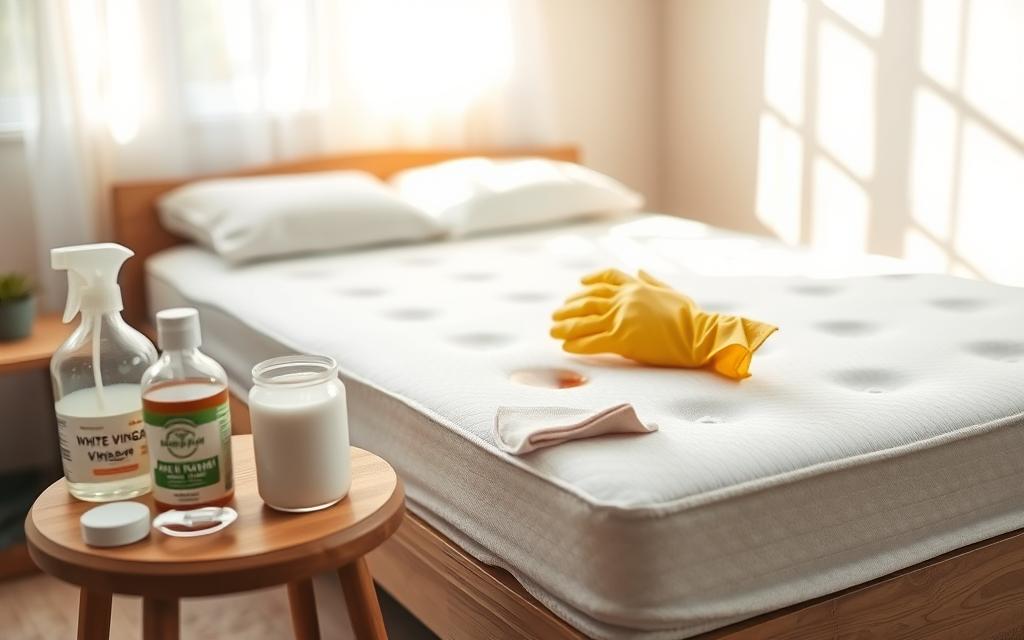
Typical jobs use common household supplies: baking soda, distilled white vinegar, mild dish soap, a spray bottle, and clean white cloths. You might also need hydrogen peroxide for specific stains, essential oils such as tea tree or lavender, a soft brush, and a vacuum with an upholstery attachment.
Fans or a dehumidifier help with drying. An optional mattress protector can save you time later.
Before you begin, test any solution on a small, hidden area. Note your mattress type—memory foam, innerspring, or latex—which dry differently and need slightly different care.
Anúncios
Read on for the full step-by-step natural mattress cleaning and stain removal plan. Keep your bed fresh, healthy, and ready for sleep.
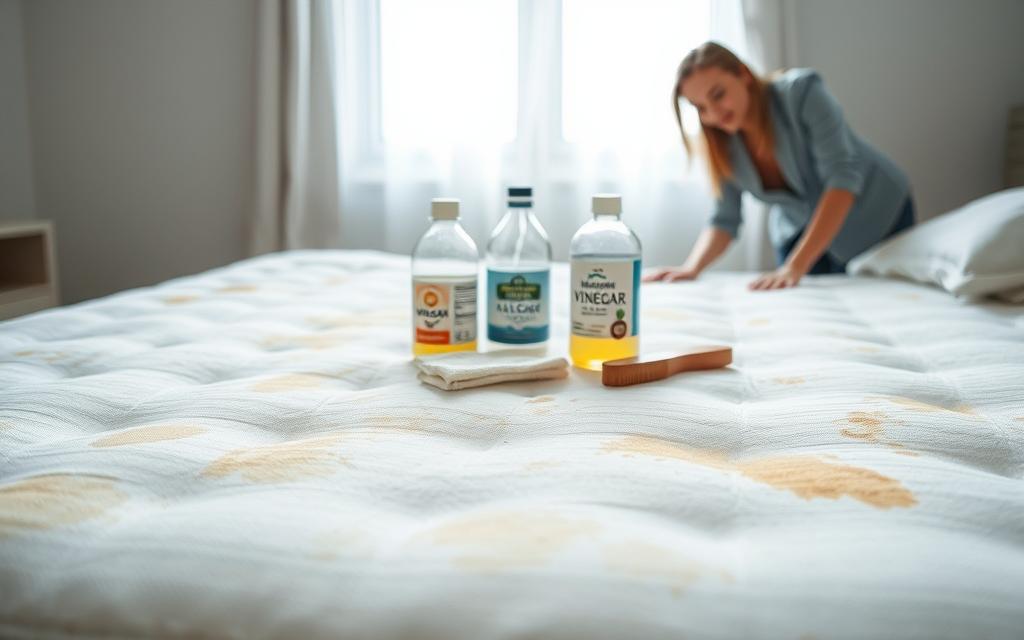
Stains on a mattress come from many sources. You might see sweat yellowing, blood spots, or pet accidents. Food and drink spills or mold after dampness also cause marks.
Each mark has different makeup. Knowing the cause helps you choose the best way to remove the stain. It also helps with natural mattress stain removal.
Sweat and body oils build up over time. They often show as yellowing and give off odor. These stains contain salts and oils that attract dirt.
Blood stains are protein-based and will set if you use warm water or let them dry. Treat blood stains with cold water and gentle blotting.
Urine stains from children, pets, or adults can leave ammonia smells and deep discoloration. Pet stains mix urine with oils and dirt, which may cause repeat marking. Enzymes must be neutralized to stop this.
Food and drink spills like coffee, wine, and juice can dye mattress fibers. Vomit and acidic spills add odor and extra cleaning challenges. Mold and mildew grow with moisture and can cause breathing problems if ignored.
Fresh stains are easier to lift. Fibers haven’t trapped proteins or dyes yet. Acting fast stops odor formation and reduces bacteria or mold growth.
Leaving stains can weaken mattress materials and shorten its life. Some manufacturers void warranties if stains or odors build up, so quick care protects your investment.
Use a waterproof, breathable mattress protector from trusted brands like SafeRest or Linenspa. They block liquids but allow airflow. Wash bedding every week and clean protectors monthly.
Address spills right away by blotting with a clean white cloth. Avoid rubbing to stop the stain from spreading or embedding deeper.
Keep pets off the bed or use a washable blanket for them. Control bedroom humidity at 30–50% with a dehumidifier to cut mold risk. Try not to eat or drink in bed when possible.
For practical cleaning tips and natural methods, visit this helpful guide on mattress cleaning. It covers non-toxic mattress stain removal and safe ways to clean stains naturally.
You can tackle most mattress stains with simple items from your pantry. These options support natural mattress cleaning and give you control over ingredients.
Baking soda is mildly alkaline and soaks up moisture and odors. Sprinkle it across the surface to deodorize, or make a paste with water for gentle spot treatment.
For light oil stains, sprinkle, let sit, then vacuum with an upholstery attachment. Leave baking soda on for 30 minutes to several hours.
For deep deodorizing, you can leave it overnight, then vacuum thoroughly. Avoid oversaturating foam when using a paste.
Distilled white vinegar (about 5% acetic acid) breaks down organic stains and neutralizes odors. Mix 1 part vinegar to 2–3 parts water in a spray bottle for routine spot treatment.
Blot immediately after spraying to avoid soaking the mattress. Use full-strength vinegar only for stubborn odors after testing on an inconspicuous area.
Combine vinegar and baking soda for a fizzing lift on some stains, but avoid over-wetting. The vinegar scent fades as it dries.
Essential oils add pleasant scent and mild antimicrobial boost. Add a few drops of lavender or eucalyptus to baking soda before sprinkling.
Mix 5–10 drops into diluted vinegar or water-and-mild-soap spray for light deodorizing. Use oils sparingly because undiluted oils can irritate skin.
Check safety for pets, since concentrated tea tree oil may harm animals. If you have allergies, test first or choose unscented options.
Hydrogen peroxide (3%) can lift blood and organic stains when used sparingly. Test a small area first because it can bleach fabrics.
Mild dish soap diluted in water helps break down oily spots. Blot to remove any soapy residue.
| Ingredient | Primary Benefit | How to Use | Caution |
|---|---|---|---|
| Baking Soda | Absorbs moisture and odors; mild abrasive | Sprinkle and vacuum after 30 min–overnight; make a paste for spots | Avoid over-wetting foam; replace if heavily soiled |
| White Vinegar (5%) | Breaks down organic stains; antibacterial | Dilute 1:2–1:3 for spray; blot immediately; test first | Less effective on dyes; avoid heavy saturation |
| Essential Oils (lavender, eucalyptus) | Freshens and adds mild antimicrobial effect | Add a few drops to baking soda or diluted spray | Use sparingly; check pet and allergy safety |
| Hydrogen Peroxide (3%) | Lifts blood and organic stains | Spot test; apply sparingly and blot | May bleach fabrics; test first |
| Mild Dish Soap | Breaks down oily spots | Use a small amount in water; blot to remove soap | Remove residue fully to prevent stickiness |
Start with a quick prep routine to make cleaning easier. Remove sheets and mattress protectors. Wash them in hot water following the care label instructions.
Vacuum the mattress using an upholstery tool. This lifts dust, hair, and crumbs. Check your mattress type—memory foam needs less moisture than innerspring.
This helps you pick safe, natural cleaning methods suited for your mattress.
Preparing your mattress for cleaning
Gather these supplies: baking soda, distilled white vinegar, a spray bottle, clean white microfiber cloths, a soft brush, 3% hydrogen peroxide, mild dish soap, and a fan or dehumidifier.
Inspect stains to identify their type. Work in a well-ventilated room. Keep liquids minimal to avoid soaking the mattress.
Treating different types of stains
For fresh urine, blot up the liquid with clean cloths. Mix 1 part white vinegar with 2 parts water and a teaspoon of mild dish soap in a spray bottle.
Lightly mist the stain, blot it, then sprinkle baking soda. Let it dry for several hours. Vacuum the residue afterward.
For older urine, use a mix of 8 oz hydrogen peroxide, 3 tablespoons baking soda, and a few drops of dish soap. Test it first on a hidden spot.
For blood stains, use cold water only. Dampen a cloth and blot until the stain lifts.
If needed, apply a small amount of 3% hydrogen peroxide. It will fizz and help lift the stain. Rinse with cold water and blot dry.
Test first to avoid bleaching nearby fabric.
For sweat and body oils, make a paste from baking soda and water. Apply it to yellowed areas and let it sit for 30–60 minutes.
Brush off the paste and vacuum the area. For oily spots, apply a diluted dish soap solution lightly and blot. Follow with baking soda to absorb leftover oils.
Coffee, tea, or juice stains respond well to quick blotting. Mix 1 tablespoon mild dish soap with 2 cups cold water.
Apply sparingly and blot the stain. If odors remain, mist lightly with a vinegar-water mix. Then sprinkle baking soda to dry.
For vomit or food stains, remove solids with a spoon. Blot liquids gently.
Use the vinegar-water spray and baking soda to neutralize odors and absorb moisture. Vacuum once dry.
Mold and mildew require caution. Move the mattress outdoors to a ventilated area.
Brush off surface spores while wearing protection. Apply distilled white vinegar to the affected area and let it sit.
Dry completely in the sun or with fans. If mold is deep or widespread, consider professional cleaning or replacement.
For pet stains, follow the urine cleaning method. Enzyme cleaners work well for pet odors but are not natural.
For an eco-friendly approach, use vinegar solution and baking soda to neutralize odors.
Rinsing and drying the mattress
Avoid heavy rinsing to reduce mold risk. After spot treatment, blot with a damp cloth to remove residue. Then absorb moisture with dry towels.
Speed drying helps. Use a fan, open windows, or a dehumidifier. If possible, place the mattress flat in sunlight and rotate it.
Sunlight reduces odors and lowers microbes but avoid prolonged UV exposure on foam mattresses.
Make sure the mattress is completely dry before replacing bedding. Use a moisture meter if you have one. Otherwise, allow several hours to a full day to dry.
These steps offer a reliable, natural DIY mattress cleaning method. They help keep your bed fresh and stain-free.
Keeping your mattress in good shape takes a few simple habits. Regular care lowers allergens and extends mattress life. It also makes mattress stain removal easier when spills happen.
A steady routine saves time and keeps your sleep space fresh.
Vacuum your mattress at least once a month to remove dust and dust mite debris from the surface.
Spot-treat marks quickly to prevent set-in stains. This reduces the need for heavy cleaning later.
Rotate or flip your mattress only if the manufacturer recommends it. Many modern models are single-sided. Check labels from brands like Sealy or Tempur-Pedic before turning.
Use a breathable waterproof protector or full encasement to block liquids while allowing airflow.
Wash sheets weekly and launder the protector monthly to keep oils and sweat from building up.
Train pets to use a pet bed or washable blanket. This limits hair and dirt on your mattress.
Keep food and drinks out of bed to reduce spills that require mattress stain removal.
Control bedroom humidity between 30% and 50%. Ventilate the room daily for fresh air.
An air purifier can help if you suffer from allergies.
For natural mattress cleaning, use baking soda and gentle vinegar solutions for routine freshening.
Call a pro when stains spread across the mattress or mold appears. Also call if smells persist after home treatment.
Seek services that use low-moisture methods and non-toxic mattress stain removal products. This protects your mattress core.
If odors or structural damage remain after professional care, or if deep mold has formed, consider replacement.
Most mattresses last seven to ten years depending on use and build quality.
Before you try any recipe, air the mattress and check the material care labels. Short sessions in direct sun reduce bacteria and odors. Avoid long exposure on memory foam to prevent breakdown.
Always return the mattress dry to stop pollen or dust from sticking. This helps keep your mattress clean and fresh.
If possible, move the mattress outdoors or place it by a sunny window. Expose each side for a few hours. Sunlight’s UV light helps freshen and reduce microbes.
For memory foam, limit sun time to brief stints and flip promptly. This protects the foam’s structure and extends its life.
Make a baking soda freshener by mixing 1 cup baking soda with 10–15 drops of lavender or eucalyptus oil. Sprinkle it on, wait 30 minutes to overnight, then vacuum.
For a light deodorizing spray, blend 1 cup distilled water, 1/4 cup white vinegar, and 5 drops of lavender oil. Mist lightly and air dry.
A gentle spot cleaner uses 1 tablespoon mild dish soap with 2 cups cold water. Use it for food and drink spots.
For blood stains, start with cold water and a small amount of 3% hydrogen peroxide. Always test first on a hidden area.
These DIY mattress cleaning solutions are low-cost and safe when used sparingly. They help keep your mattress fresh naturally.
For tougher messes, try plant-based enzyme cleaners that target organic stains. Use oxygen-based bleach for washable covers. Follow label directions carefully and avoid foam.
Castile soap, such as Dr. Bronner’s, diluted in water cleans light soiling without harsh chemicals. Club soda lifts fresh beverage stains—blot immediately then treat the spot.
Keep a small kit with baking soda, vinegar, a spray bottle, and cloths for quick action. Always patch-test homemade stain removers and use minimal moisture to prevent mold.
Regular organic mattress cleaning with eco-friendly stain removers and prompt care keeps your bed fresher. This also extends your mattress’s life.