Our Location
304 North Cardinal St.
Dorchester Center, MA 02124

304 North Cardinal St.
Dorchester Center, MA 02124

Easily learn how to clean curtains without taking them down with these quick and no-hassle methods. Keep your curtains fresh and maintained effortlessly!

Anúncios
Surprisingly, the average curtain can hold up to a pound of dust and allergens each year.
Learning how to clean curtains without taking them down improves your home’s air quality.
If you want quick curtain cleaning tips that fit a busy schedule, this guide helps you.
You’ll learn easy methods like vacuuming with an upholstery attachment and spot treating stains with mild detergent or OxiClean.
Anúncios
Using a handheld steamer refreshes fabric and lowers dust mites.
Always check the care label before applying water or heat to curtains.
Even if panels are machine-washable, cleaning curtains in place prevents wear on pleats, linings, and hardware.
For dry-clean-only or delicate fabrics, vacuum, steam safely, or call a professional.
Anúncios
Try a 10–15 minute weekly routine: dust or brush, vacuum top to bottom, and spot clean visible marks.
Steam high-traffic areas once a month to keep curtains fresh and extend their life.
These quick steps also reduce pet dander and allergens in your home.
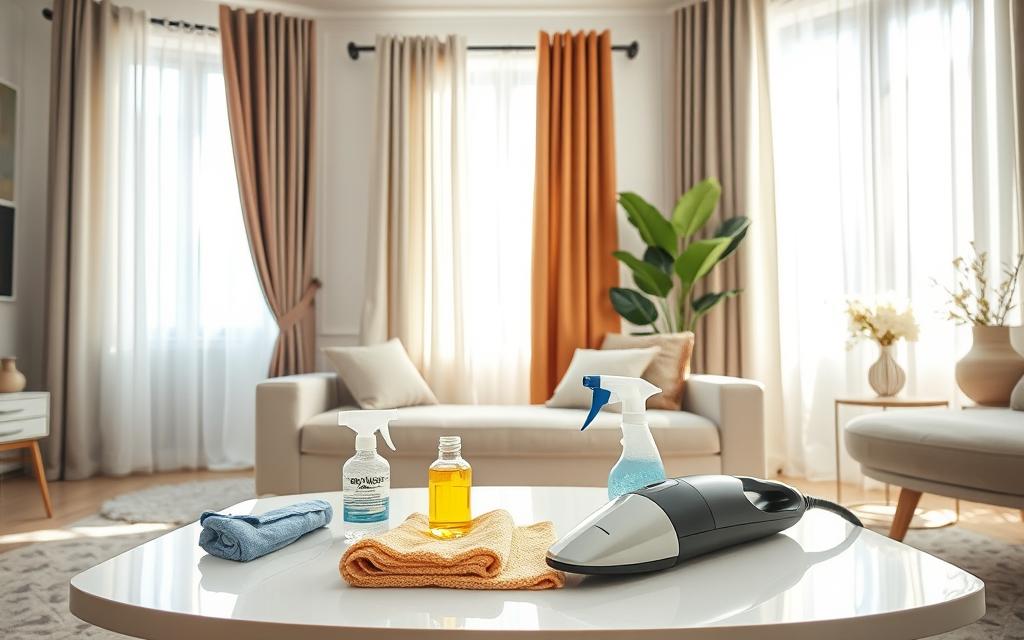
Curtain fabrics vary greatly. Cotton, linen, polyester, velvet, silk, sheer voile, and blends all clean differently. Knowing the fiber helps you pick safe cleaning methods without removing curtains from the rod.
Cotton is sturdy and often machine washable if the care label allows. If not, vacuum and treat spots with the panels hanging. Always test a hidden area for colorfastness before using water or detergent.
Linen breathes well but wrinkles easily. You can steam many linen panels while they hang. For larger washes, take them down. Use gentle spot cleaners for small marks.
Polyester and synthetic blends tolerate steam, vacuuming, and light spot cleaning. They respond best to in-place care. These fabrics are forgiving if you follow daily curtain care hacks.
Velvet and suede have delicate piles that can crush. Use a soft-bristle brush and an upholstery vacuum attachment. Steam from a distance to lift the pile and avoid heavy moisture, which flattens texture.
Silk and embroidered fabrics usually require dry cleaning. For in-place care, vacuum gently and use silk-safe spot cleaners after testing an unseen corner. Avoid soaking these materials with water.
Sheer or voile curtains are fragile. Use low suction on your vacuum or a feather duster to remove dust. Light steaming freshens sheers, but avoid rubbing that stretches threads.
Lined and blackout curtains hide dust and odors between layers. Vacuum the visible fabric and steam the outer layer to refresh it. Check the lining’s care label for water safety. Some need professional care.
Always read the care label and test for colorfastness before cleaning. Consider hardware weight and hemming when deciding if removal is practical. Heavy, interlined curtains are hard to wash often. Use dusting and spot treatment instead.
Act quickly for stains. Blot food stains with cold water. Absorb grease with cornstarch before vacuuming. Let mud dry, then vacuum gently. Ink may clean with rubbing alcohol after testing. These steps help clean curtains without taking them down.
Use eco-friendly cleaners whenever possible. Diluted white vinegar removes light stains and odors. Baking soda deodorizes fabric. Mild dish soap in cool water works for many resilient textiles. These hacks keep curtains fresh without much effort.
Maintain a cleaning schedule: dust monthly, spot clean as needed, and deep clean seasonally. For a practical guide, see this resource on curtain cleaning tips and in-place care.
Before you start, gather the right gear. The right tools make curtain cleaning faster and safer. Use a simple kit for curtain maintenance tricks. This keeps the job easy and stress-free.
A vacuum with an upholstery brush removes dust, pet hair, and allergens while curtains hang. Set suction low for delicate fabrics like sheers and silk. Use medium suction for heavier drapes.
Vacuuming weekly or biweekly stops buildup and keeps odors away.
Choose trusted brands like Dyson, Shark, or Hoover for reliable performance. For budget options, cordless vacuums with upholstery brushes still work well.
Microfiber traps dust and needs less cleaner, keeping fabrics drier. Use a dry cloth for dusting and a damp one for spot cleaning. These cloths are lint-free and washable for many uses.
Keep several microfiber cloths in different sizes. Small cloths work well on pleats and seams. Large cloths speed dusting of full curtain panels.
Carry a spray bottle with diluted mild detergent like Seventh Generation or Dreft for pretreating spots. Enzyme cleaners are good for organic stains. Use oxygen bleach like OxiClean for color-safe stain removal after testing first.
Stain sticks such as Tide To Go handle fresh stains quickly. Use a soft-bristle toothbrush and sponge to work cleaners into textured fabrics. A clean towel helps blot moisture.
A lint roller or rubber gloves remove pet hair when vacuuming isn’t possible. Add safety items like a step ladder for high hems, nitrile gloves for chemicals, and a handheld steamer with recommended steam distance. These complete your curtain cleaning kit and help make the process easy and safe.
Before starting, check the care label and fabric type. Remove dust and cobwebs from the window top and rod. Test cleaner on a hidden area to check colorfastness.
Gather your tools: vacuum with upholstery tool, microfiber cloths, gentle stain remover, handheld steamer, and ladder.
Follow a clear order to protect fabric and clean faster. Start high, then work downward. This way dust won’t settle on cleaned areas.
Set vacuum to low suction and attach the upholstery brush. Gently press the tool along folds and pleats to lift trapped dust. Move from top to bottom to avoid dirtying fresh areas.
Vacuum both sides if reachable. Clean window sills and tracks to avoid quick re-soiling. For delicate sheers, use a dry microfiber or soft feather duster instead.
Act fast on fresh spills. Blot with a clean towel to absorb liquid—do not rub. Mix one teaspoon of Woolite or Dreft with lukewarm water for a mild cleaning solution.
Test solution first. Apply lightly with a spray bottle or damp cloth. Blot stains from outside inward to prevent spreading. For oil stains, use a small amount of Dawn dish soap.
Rinse by blotting with clean water. Use enzyme cleaners like Nature’s Miracle for organic stains and follow directions. Gently lift dirt with a soft toothbrush, then blot dry.
Allow curtains to air-dry. Avoid heat until fully dry to protect fabric.
Steaming refreshes fabric, reduces wrinkles, and kills dust mites without soaking curtains. Use handheld steamers like Jiffy, PurSteam, or Conair for most tasks. Tall windows may need a standing steamer.
Keep the steamer head several inches from fabric. Move steadily from top to bottom to prevent soaking one spot. For velvet or pile fabrics, steam from the wrong side or hold further away.
This prevents flattening the nap. After steaming, let curtains dry fully before closing. Open windows or use a fan to speed drying and stop mildew.
Check for any spots left. Repeat treatments if needed.
| Step | What to Do | Best For |
|---|---|---|
| Preparation | Inspect labels, remove cobwebs, gather vacuum, microfiber cloths, steamer | All fabrics |
| Vacuuming | Use low suction with upholstery brush, work top to bottom, clean both sides | Cotton, linen, blends |
| Spot Cleaning | Blot spills, use mild detergent mix or Dawn for grease, enzyme cleaner for organic stains | Stains on most fabrics |
| Steaming | Hold steamer several inches away, move steadily, steam from back for pile | Delicate, wrinkle-prone, or dusty curtains |
| Final Checks | Allow full drying, smooth pleats, secure hooks and hardware | All curtains |
Keeping curtains fresh saves time and keeps rooms feeling bright. Use simple routines to prevent buildup. These tricks extend fabric life and cut down deep cleaning.
Regular curtain care is about small, steady steps. Dust weekly with a microfiber cloth or soft vacuum attachment. Treat spills immediately with mild soap and water to stop stains.
Every two to four weeks, vacuum the full length of the panels. Clean windows and sills too. Less dirt on frames means less transfer to fabric.
Rotate panels or reverse drapes to even out sun exposure. Use liners to block UV rays and limit dust. Liners protect delicate fabrics and are easier to launder.
Make a simple checklist for weekly and monthly care. Weekly: light dusting and spot checks. Biweekly to monthly: full vacuuming. Spot-treat stains immediately.
Increase vacuum frequency if you have pets or allergies. Keep pets away from window seats. Avoid smoking indoors to protect your curtains.
Use blinds or UV window film to reduce sun fading. These preventive steps are some of the best curtain care tips you can use.
Spring is ideal for a deep refresh. Steam both sides and vacuum thoroughly. Launder or dry-clean if fabric labels allow.
Open windows to air fabrics and reduce odors. Summer may need extra dusting due to pollen. More frequent vacuuming helps here.
In fall, check for pet dander and allergens. Consider an allergen spray if safe for your fabric. Winter brings more dust and odors.
Use fabric freshener made for curtains and increase vacuum routine. Schedule an annual professional clean for heavy or dry-clean-only drapes.
Follow these no-hassle curtain cleaning steps and seasonal tips. They keep your window treatments looking their best with minimal effort.
Before choosing a method, read the care label and check the problem. Many fabrics handle light dust and small stains well when cleaned in place.
For tougher stains, seek expert help and follow trusted advice to protect your curtains.
Fabrics marked dry-clean-only, like silk or velvet, should be cleaned by certified professionals. Large, heavy, or custom drapes are best cleaned by specialists offering on-site or pick-up services.
Persistent odors like smoke or mold need professional cleaning with industrial equipment. Local dry cleaners that offer drapery services, national chains like Tide Cleaners, and specialty cleaners with top reviews are good options.
For step-by-step help, search online curtain cleaning tutorials from trusted sources. YouTube channels such as This Old House, Bob Vila, and Good Housekeeping show steaming, spot-cleaning, and vacuuming methods clearly.
Manufacturer videos from IKEA, Pottery Barn, and West Elm offer care tips specific to their products. Sites like The Spruce and Better Homes & Gardens provide illustrated guides and checklists.
Choose tools that fit your fabric and follow label instructions. Always test cleaners on a small spot first. For steam cleaning, try the Jiffy Handheld Steamer, PurSteam Garment Steamer, or Conair Turbo ExtremeSteam.
Dyson V-series cordless vacuums, Shark Navigator, and Hoover WindTunnel with upholstery tools work well. Use gentle cleaners like Woolite or Dreft for delicates, and OxiClean or Nature’s Miracle for tougher stains.
Tide To Go pens help fix stains quickly. Microfiber cloths like Amazon Basics or Zwipes and Scotch-Brite lint rollers remove dust and pet hair. Include safety items like a Little Giant step ladder, soft-bristle brush, and gloves.
Match product strength to the care label and read reviews. For allergies, choose hypoallergenic, fragrance-free cleaners and a HEPA-filter vacuum. When unsure, consult care labels, watch tutorials, or hire professionals to protect your curtains.