Our Location
304 North Cardinal St.
Dorchester Center, MA 02124

304 North Cardinal St.
Dorchester Center, MA 02124

Learn how to organize pantry with limited space effectively with our step-by-step tips and creative storage solutions for a more inviting, efficient kitchen.
Anúncios
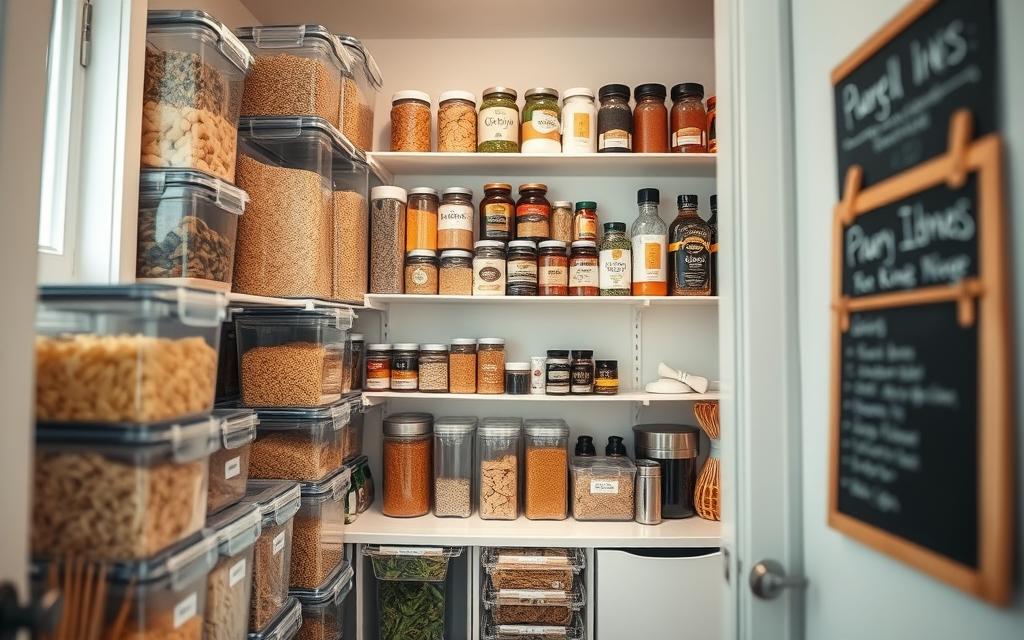
Did you know the average household throws away about 20% of the food it buys? This often happens because food gets lost or forgotten. Wasted food usually starts in an overcrowded pantry.
Learning how to organize a pantry with limited space can save you money and time.
This short guide will walk you through a clear, friendly process. It helps get your pantry working for you. You’ll learn tips to reduce food waste and speed up meal prep.
Anúncios
Organizing your pantry will also make your kitchen feel bigger and more efficient.
We’ll follow simple steps: assess your current setup, declutter and purge, and optimize storage. Then, maximize vertical space, group similar items, and apply smart pantry hacks.
Keep the system maintained and look for ongoing inspiration. These ideas work for reach-in closets, narrow built-ins, kitchen cabinets used as pantries, and freestanding pantry furniture.
Expect quick wins and realistic time commitments. Assessment takes 15–30 minutes, decluttering about 30–90 minutes, and storage solutions 1–3 hours. Time depends on whether you shop at The Home Depot, Target, or IKEA.
Anúncios
Many options are also budget-friendly.
Before you start, check for pests and wipe shelves with a mild cleaner like white vinegar. Store heavy items low for safety.
With a little time and these pantry organization tips, you’ll gain clear visibility of your inventory. You’ll also get more usable shelf space and fewer duplicate purchases.
Before you buy organizers or racks, take time to assess pantry layout and note what works and what does not.
A quick, honest review saves money and helps you plan small pantry design ideas that fit your home.
Gather a tape measure, camera, and a notepad so you can record dimensions and obstacles.
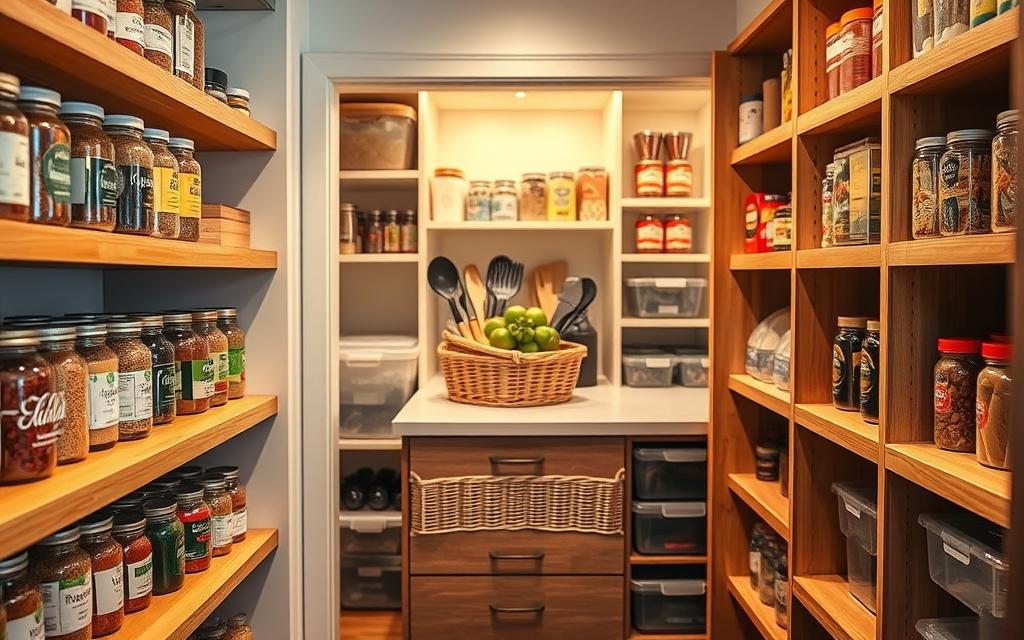
Measure shelf height, depth, and overall width. Include doorways, floor-to-ceiling clearance, and the swing of any door.
Check for vents, outlets, or light switches that limit placement of taller items or added shelving.
Take photos from several angles and sketch a simple layout. Note standard shelf depths of 12–16 inches and mark shallow shelves that need different storage.
Measure vertical clearances between shelves to see if risers or stackable bins will fit.
Make an inventory and mark use frequency: daily, weekly, monthly, or rare. List staples like rice, pasta, canned goods, baking supplies, snacks, and spices.
Put frequently used items at eye or arm level in your plan.
Flag bulky or odd-shaped items such as cereal boxes, baking sheets, and bulk flour.
Knowing their sizes lets you pick containers and create workable small pantry design ideas that keep these items accessible.
Pull expired goods and duplicates. Check quality of perishable items like nuts and crackers.
Set aside non-perishables you can donate to Feeding America affiliates or local food banks in the U.S.
Relocate oversized or seasonal items to the garage, basement, or freezer to free shelf space.
Prepare donation and disposal bags during the assessment so clutter does not return.
Do the assessment with your household to capture true usage patterns.
Complete this step before buying storage tools to avoid unnecessary purchases and make your plan for how to organize pantry with limited space more effective.
Start by clearing a small work area to sort without stress. Pull one shelf at a time and place items on the counter. This careful approach makes decluttering manageable. It also helps you spot duplicates and expired goods.
Check “use-by” and “best-by” dates with USDA guidance if unsure. Smell and inspect packages for damage, pests, or mold. Group items into cans, baking, snacks, breakfast, and condiments to speed re-shelving.
Work shelf-by-shelf and avoid moving everything at once. This keeps the focus and helps you finish in one session. It suits most schedules when maximizing pantry space quickly.
Set aside unopened, non-expired, non-perishable items for donation. Consider local options like Feeding America food banks or Salvation Army branches. Add compostable or organic waste to your compost bin.
Recycle packaging if your municipality accepts it. Toss damaged or contaminated items following local waste rules. This split between keep, donate, and discard is key in decluttering.
Build a clear keep pile sorted by use frequency and category. Place daily staples where they are easy to reach. Put less-used items on higher or lower shelves.
Consolidate duplicates into airtight containers like OXO brand or glass mason jars for bulk flour, sugar, and grains. Decide container sizes as you sort. This helps maximize pantry space when you re-shelve. Use the one-year rule to guide donation or disposal if you haven’t used items in 12 months.
When shelf space is tight, smart choices make a big difference. Focus on visibility, flexibility, and stackability to maximize every inch.
Below are practical tips that combine pantry storage solutions, small pantry organization ideas, and pantry shelving ideas.
These suggestions will help you shop and organize with confidence.
Pick clear, airtight containers like glass or BPA-free plastic to keep staples fresh and easy to spot.
Brands such as OXO, Anchor Hocking, and Ball mason jars are widely used and work well.
Use uniform shapes to stack neatly and save shelf space.
Label lids with contents and dates to track freshness quickly.
For snacks and small items, clear bins or tiered shelf organizers let you see what’s left without digging.
Choose adjustable shelving systems so you can change heights to fit tall cereal boxes or short spice jars.
Look for predrilled kits or DIY options like slatwall and pegboard for a custom fit.
If you have fixed shelves, add risers or consider aftermarket kits from stores like The Home Depot or Lowe’s.
Check weight ratings on shelves and hardware, especially when storing heavy glass containers or cast-iron cookware.
Proper support keeps your layout safe and durable over time.
Stackable plastic or fabric bins save vertical space and create zones for snacks, kid-friendly items, or root vegetables.
Clear stackable bins from Ikea or Sterilite combine visibility with modular sizes.
Choose bins with front handles or labels to pull them out easily.
Use deeper bins on lower shelves and shallower ones at eye level for easy access.
Mix budget buys from Target and Walmart with higher-quality pieces where durability matters most.
| Solution | Best For | Approximate Cost | Recommended Retailers |
|---|---|---|---|
| Clear Airtight Containers (Glass) | Long-term storage of grains, pasta, flours | $15–$40 per set | OXO, Anchor Hocking, Amazon |
| Clear Plastic Stackable Bins | Snacks, canned goods, kid items | $8–$25 each | Ikea (Samla), Sterilite, Walmart |
| Adjustable Shelving Kits | Custom heights, heavy loads | $50–$300 | The Home Depot, Lowe’s, Amazon |
| Tiered Shelf Organizers & Risers | Spices, small jars, visibility | $10–$30 each | Target, Amazon, Bed Bath & Beyond |
| Fabric Pull-Out Bins | Produce, soft packaged goods | $12–$40 each | Ikea, Wayfair, Amazon |
Think upward to free up floor and shelf space. Small changes help you maximize pantry storage in neat and reachable ways.
Shelf risers double the usable surface on one shelf by creating two levels. Use risers for spices, canned goods, and small jars. Leave taller items on open shelves. Adjustable metal or acrylic risers from IKEA or Amazon are stable and budget-friendly. They work well in tight pantry spaces.
Hooks turn vertical strips into practical storage. Adhesive Command hooks hold measuring spoons, mesh garlic bags, or lightweight pans without hurting walls. For heavier items, use screw-in hooks or rail systems anchored into studs. Magnetic hooks or hanging baskets attach to shelves and free shelf space.
Over-the-door racks make the pantry door’s back usable for spices, snacks, or cleaning supplies. Choose slim, high-capacity organizers from brands like SimpleHouseware or Home Basics. Avoid bulky designs that block movement. For sliding doors, mount narrow vertical shelves on an adjacent wall or unused pantry strips for similar benefits.
Combine these tips with pull-out baskets or lazy Susans for corners and deep shelves. Always follow safe load limits, anchor heavy items well, and pick adhesive products rated for your needs.
For more ideas from pros, check pantry organization tips at pantry organization tips. Using vertical storage and back-of-door ideas truly maximizes pantry space.
| Strategy | Best For | Space-Saving Potential | Notes |
|---|---|---|---|
| Shelf Risers | Short items, cans, spices | High | Use adjustable metal/acrylic risers for stability; place frequently used items at eye level |
| Hooks & Rail Systems | Utensils, aprons, mesh produce bags | Medium | Command hooks for renters; anchor heavier hooks into studs |
| Over-the-Door Racks | Spices, snacks, cleaning supplies | High | Choose low-profile designs for swinging doors; use clear pockets for visibility |
| Magnetic Spice Racks | Small spice jars on unused wall areas | Medium | Mount on metal strips; keeps spices visible and compact |
| Pull-Out Baskets & Lazy Susans | Deep shelves and corners | High | Improve accessibility and reduce wasted vertical depth |
Start by surveying what you have and decide how you want to use the space. Grouping like items saves time when you cook. It also makes it simpler to keep the pantry tidy.
Use clear bins, baskets, and shelves to mark out areas at a glance.
Create zones for baking, breakfast, snacks, canned goods, beverages, spices, and bulk goods. Put seasonal or specialty items on top shelves or low shelves based on how often you reach for them.
A baking zone might hold flour, sugar, baking powder, and measuring tools in one bin.
Use small baskets for kids’ snacks or one shelf for meal-prep staples such as pasta, sauce, and canned proteins. This approach helps family members know where things belong.
Label shelves, bins, and containers with a consistent style. Choose a label maker, chalkboard label, or printed adhesive label to keep typography uniform.
Add helpful details like open date or use-by date on containers to reduce waste.
You can use color-coded labels in shared households to mark ownership or dietary needs, like gluten-free or nut-free. Involving family members in labeling increases buy-in and helps maintain zones.
Store daily-use items between waist and eye level for easy reach. Keep coffee, cereal, cooking oil, and frequently used canned goods on a grab-and-go shelf near the pantry entrance.
Place heavy bulk bags like flour or pet food on lower shelves to reduce lifting strain.
Periodically reassess zones as your cooking habits change. These pantry organization tips keep things working well as you fine-tune what belongs where.
Small changes can make your pantry feel larger and more functional. Use simple pantry organization hacks to keep items visible and fresh.
The right tools save time when you cook and shop.
Start with corner and deep shelves where items tend to hide. A lazy susan pantry turntable brings bottles and small jars forward.
This way you do not tip or pull items to reach the back. Choose tiered models for oils, vinegars, and condiments to save shelf space.
Place a turntable on lower shelves for heavy bottles to reduce reaching and tipping. Plastic or metal lazy Susans are light and easy to clean.
Tiered versions offer multiple levels for spices and small containers without crowding the shelf.
Mason jar pantry storage works well for grains, beans, nuts, and flours. Wide-mouth Ball or Kerr jars make scooping easier and speed refills.
Use matching jar sizes to stack neatly and keep a clean look.
Glass jars are non-reactive and durable but can break and add weight. If you have small children or weak shelves, consider heavy-duty plastic alternatives.
These mimic the airtight seal of glass jars safely.
Clear pantry bins help everyone see what’s inside at a glance. Use shallow bins for snacks so kids can grab items without making a mess.
For cans, stackable clear bins or tiered organizers let you face labels forward. This helps use older stock first.
Brands like Sterilite, Target, and IKEA offer affordable, stackable options that improve visibility and keep a tidy look.
Label each bin to track inventory and spot low supplies fast.
| Hack | Best For | Pros | Cons |
|---|---|---|---|
| Lazy Susans | Corner shelves, deep shelves | Easy access, reduces reaching, tiered saves vertical space | Can spin too freely if overloaded; needs stable base |
| Mason Jars | Grains, beans, nuts, baking mixes | Airtight, attractive, easy to label and stack | Heavy and breakable; may need plastic for child-safe areas |
| Clear Pantry Bins | Snacks, canned goods, small packets | High visibility, stackable, easy pull-out access | Requires consistent sizing for best stacking; can look cluttered without labels |
Quick hacks bring big wins. Repurpose a hanging shoe organizer for single-serve packets. Use tension rods to divide cookie sheets and cutting boards.
Portion items into labeled zip-top bags inside bins for grab-and-go convenience.
Keep a small step stool near the pantry for safe access to top shelves. Store frequently used tools and bins at eye level to avoid searching.
With a few pantry organization hacks, the space works harder and you waste less food.
Keeping a tidy pantry takes small, regular steps. Set a simple routine to keep your space useful and calm.
Quick weekly checks stop clutter. A monthly audit returns items to their zones and shows what needs replacing.
Block five to ten minutes on your calendar for quick pantry inspections. Move older packages forward and toss expired goods.
Wipe any spills during your check. Use a phone reminder or a shared chore list so everyone helps keep order.
Seasonal shifts change what you store. Swap summer snacks for winter baking supplies to match your habits.
Measure shelf heights before putting away bulk goods or new containers. Keep an overflow bin for new purchases temporarily.
This practice prevents boxes from piling up on the floor. Re-label sections when your cooking changes.
If you bake more, expand the baking zone and move tools near prep areas. Small tweaks keep your pantry organized.
Use a simple inventory method that fits your lifestyle. Try phone apps like Out of Milk or Google Keep or use a whiteboard on the fridge.
Note quantities roughly, such as “1/4 bag flour.” This helps speed shopping and reduce waste.
Encourage family members to update the list when they finish items. Clear containers and visible placement make tracking easy.
These habits reduce duplicate purchases. For more ideas on maintaining fixtures and surfaces in storage areas, see this guide: cleaning and care tips.
| Task | Frequency | What to Do |
|---|---|---|
| Quick check | Weekly | Rotate older items forward, remove crumbs, wipe small spills |
| Deep audit | Monthly | Reassess zones, adjust shelf heights, restock staples |
| Seasonal swap | Every 3 months | Exchange seasonal items, update labels, reorganize bins |
| Inventory update | As items are used | Record amounts on app or whiteboard, note items to buy |
| Overflow management | When new purchases arrive | Use overflow bin, measure containers, integrate or rehome |
Before you buy anything, gather ideas that fit your space and budget. Watch tutorial videos and time-lapse makeovers on YouTube channels like Clean My Space, Alejandra.tv, and The Home Edit.
These videos show pantry storage solutions in action. Read articles from Apartment Therapy, Good Housekeeping, and Real Simple for practical projects and budget tips. They translate well to small pantry inspiration.
Take your measurements and visit stores to test items in person. IKEA, Target, HomeGoods, The Home Depot, and Lowe’s display real setups so you can check build quality, dimensions, and color.
Bed Bath & Beyond and Cost Plus World Market often carry unique containers and accents. These help turn pantry organization ideas into a polished result.
Follow professional organizers on Instagram, Pinterest, and TikTok for daily tips, product reviews, and creative hacks. Search hashtags like #pantryorganization, #smallpantry, and #pantrygoals to find solutions and sources for shown items.
Save pins, ask questions in comments, and adapt what works to your routine. Do not copy trends wholesale.
Use inspiration as a starting point: combine what you learn with your measurements and habits. Choose pantry storage solutions that match your cooking habits and space constraints.
This way, your pantry stays useful and enjoyable every day.