Our Location
304 North Cardinal St.
Dorchester Center, MA 02124

304 North Cardinal St.
Dorchester Center, MA 02124

Create a healthier home with these easy diy natural cleaning spray recipes. Discover non-toxic, eco-friendly cleaners you can make today!
Anúncios
Surprisingly, the average U.S. household uses cleaning products that release volatile organic compounds (VOCs). These VOCs can affect indoor air quality for weeks after a deep clean.
This article offers simple, practical DIY natural cleaning spray recipes. They help you replace harsh store-bought products with safe, effective homemade solutions.
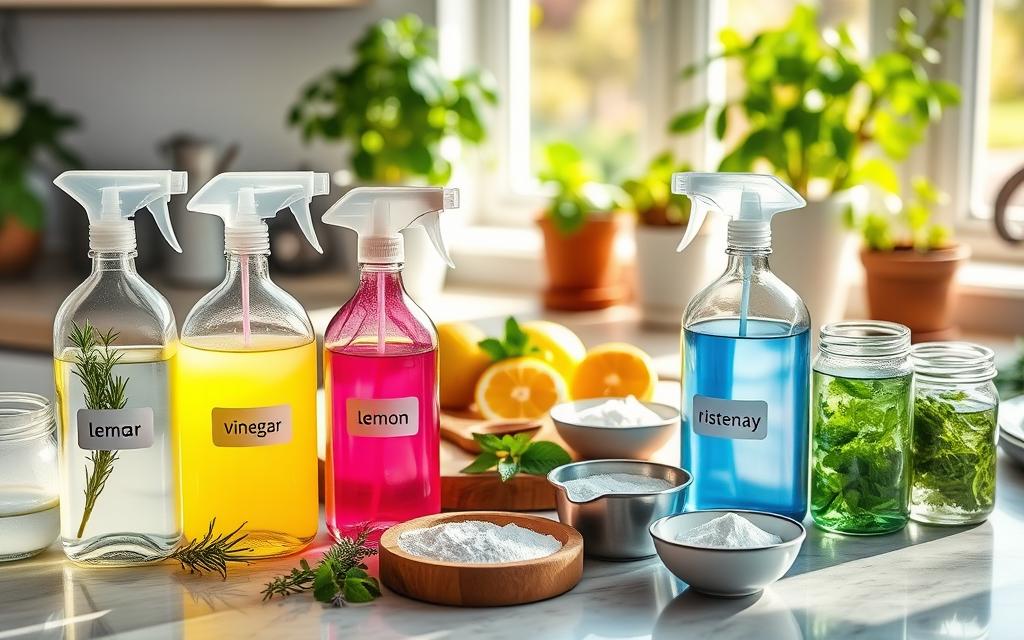
You’ll find sprays made from common kitchen staples, essential oils, and natural disinfectants. These are easy to mix and gentle on your home’s air.
Anúncios
Expect clear ingredient lists and step-by-step mixing directions. You’ll also get recommended uses for glass, bathroom, kitchen, and all-purpose sprays.
Additionally, there are tips for customizing scents and advice on storage and safety. This helps your homemade sprays stay effective longer.
These recipes suit typical household surfaces. Always test a small hidden spot first. Never mix bleach and vinegar, as it creates harmful fumes.
With these non-toxic, eco-friendly formulas, you can make your home healthier. You’ll also save money and reduce your environmental footprint.
Anúncios
Making your own cleaning sprays lets you control what touches surfaces and the air in your home. You can swap harsh ingredients for simple pantry staples. Craft green cleaning recipes that work for kitchens, bathrooms, and glass.
This approach makes it easy to build a routine that fits your household needs.
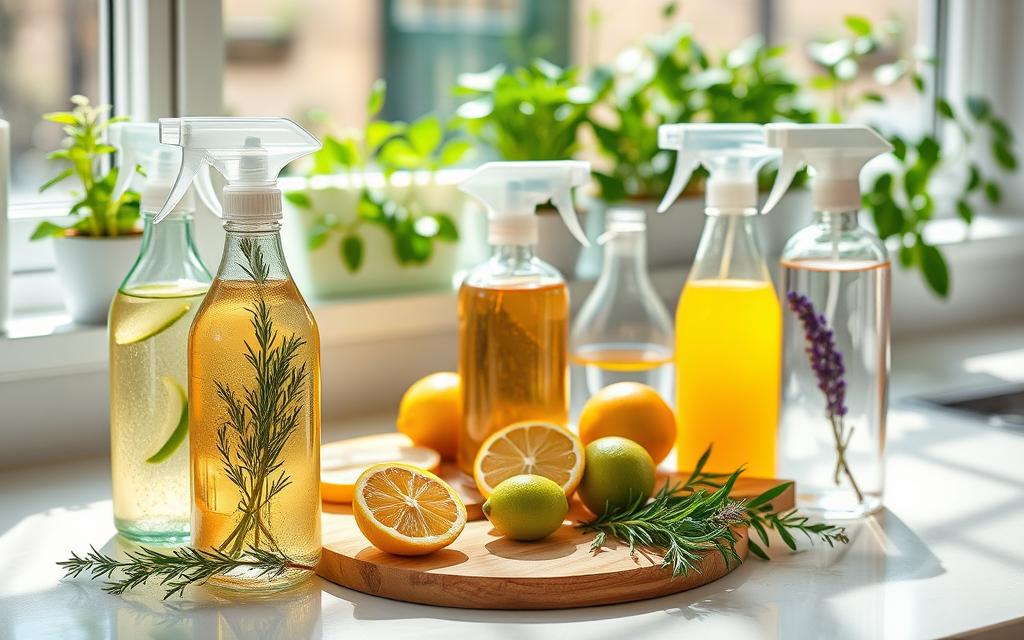
Natural ingredients like white vinegar, baking soda, castile soap, and lemon juice cut grease, dissolve buildup, and freshen fabrics. They do this without strong synthetic chemicals. Plant-based castile soap such as Dr. Bronner’s reduces synthetic surfactants and artificial fragrances.
Adding essential oils can bring mild antimicrobial effects and pleasant scents. This keeps your home safer for kids and pets.
Homemade sprays avoid petroleum-based surfactants, synthetic fragrances, and chlorine agents that harm waterways. Choosing biodegradable items like lemon juice and vinegar supports wastewater systems and lowers plastic runoff. Refillable glass or PET bottles and concentrates reduce single-use plastic waste and transport emissions.
Pantry staples cost far less per use than many store cleaners. One bottle of white vinegar or castile soap can fill several spray bottles. This replaces multiple $5–$10 commercial products.
You can scale recipes, buy in bulk, and reuse bottles to save more over time. Keep your home stocked with non-toxic cleaning products.
Before you mix, learn the building blocks for making gentle, effective cleaners. Choosing the right items helps you craft an organic cleaning spray.
Such sprays work on many surfaces and support non-toxic cleaning products at home. Use distilled water when possible to keep recipes stable.
It also helps reduce mineral spots.
White distilled vinegar is an acidic cleaner that cuts mineral deposits and deodorizes well. Avoid using it on marble, granite, and waxed wood.
This prevents etching or damage to delicate surfaces.
Baking soda works as a mild abrasive and deodorizer. It shines in paste form for scrubbing tough grime.
It also pairs well with liquid cleaners for extra power.
Lemon juice provides a natural acid and fresh scent. Use it for soap scum and light stains, but not on porous stones.
Rubbing alcohol at 70% evaporates quickly. It helps you get streak-free glass and disinfects when properly used.
Castile soap is a biodegradable surfactant from vegetable oils. It cuts grease without harsh chemicals but use sparingly to avoid extra suds.
Tea tree oil has antimicrobial properties and works well to spot clean mold or mildew. Add small amounts to avoid skin irritation.
Lavender oil offers a calming scent and mild antimicrobial action. Lemon and orange oils add degreasing power but can affect some plastics or finishes.
Eucalyptus and peppermint give a bright, fresh aroma and may add antimicrobial benefits. Use 10–30 drops per 16 oz bottle from quality brands like Plant Therapy, doTERRA, or Young Living.
70% isopropyl alcohol or ethanol-based solutions kill many viruses and bacteria if prepared correctly. Use them on high-touch areas for fast action.
Hydrogen peroxide at 3% is a mild disinfectant safer than bleach on many surfaces. Do not mix it with vinegar or alcohol.
Vinegar has some antimicrobial activity but is weaker than alcohol or hydrogen peroxide. It should not replace EPA-registered disinfectants for illness.
Essential oils like tea tree and thyme show antimicrobial effects but may not fully replace registered disinfectants in high-risk situations.
For everyday cleaning, combine these staples into gentle, effective homemade solutions. During illness or high-risk exposure, follow CDC guidance and use EPA-registered disinfectants or 70% alcohol solutions.
This easy, effective formula gives you a versatile cleaner for daily tasks. Use it when you want to avoid harsh chemicals. It’s gentle on surfaces and kind to the planet.
The recipe below is a popular homemade cleaning solution for kitchens, bathrooms, and general tidying.
Ingredients You’ll Need
Step-by-Step Instructions
Best Uses for All-Purpose Cleaner
Use this spray on counters (avoid natural stone), sealed countertops, appliance exteriors, laminate, and painted surfaces. It works well for quick spill cleanups.
Wipe with microfiber cloths for the best finish and reduced streaking.
Do not use on unsealed wood, marble, or granite because vinegar can damage porous stone. For natural stone, mix a small amount of castile soap with water instead.
This guidance helps you get reliable results while protecting delicate surfaces.
| Surface | Recommended? | Notes |
|---|---|---|
| Sealed countertops | Yes | Works well; wipe dry with microfiber for a streak-free finish. |
| Laminate | Yes | Safe when patch-tested; avoids harsh chemical residue. |
| Appliance exteriors | Yes | Good for stainless steel and painted finishes; buff with a soft cloth. |
| Unsealed wood | No | Vinegar can strip finish; use a damp cloth or oil-based cleaner instead. |
| Marble and granite | No | Use a pH-neutral cleaner or diluted castile soap in water to avoid etching. |
Bright, clear windows make a home feel fresh. Use this simple recipe to create a streak-free glass cleaner.
This cleaner rivals store brands and stays true to eco-friendly and DIY natural cleaning spray ideas.
Key Ingredients for Crystal Clear Glass
Gather a 16 oz spray bottle, 1 cup distilled water to reduce mineral streaks, and 1/4 cup 70% isopropyl rubbing alcohol to speed drying.
Add 1–2 tablespoons white vinegar for extra cutting power if needed. Then add 5–10 drops lemon essential oil for a fresh scent.
Directions for Mixing Your Spray
Pour distilled water and rubbing alcohol into the spray bottle first. Add white vinegar for stronger cleaning action.
Next, drop in the lemon essential oil, close the cap, and invert gently to mix. Label the bottle with the date.
Store the bottle in a cool, dark place.
Tips for Streak-Free Results
Work on cloudy days or when glass is out of direct sun to avoid quick drying that leaves marks.
Use lint-free microfiber cloths or clean newspaper for wiping. Avoid paper towels that shed fibers.
Spray lightly and wipe instead of flooding the surface to keep streaks away.
If glass is heavily soiled, pre-clean with mild diluted castile soap to remove grime.
Then finish with this streak-free glass cleaner for the best shine.
This method works well with eco-friendly cleaners and other DIY natural cleaning spray recipes you may use at home.
Keeping your bathroom fresh and clean is easy with non-toxic cleaning products. Below are the ingredients, mixing steps, and where to use each formula. These DIY natural cleaning spray recipes help you reduce chemicals while keeping surfaces spotless.
Use 3% hydrogen peroxide as a mild oxidizer that kills many microbes on contact. Tea tree essential oil fights mold and mildew with antifungal and antimicrobial powers. White vinegar removes soap scum and mineral buildup but disinfects less widely.
Baking soda works well as a scrubbing agent for grout and tubs. Use it as a paste, not in a spray bottle, to avoid clogging.
Follow two safe methods to avoid mixing ingredients that could react badly.
Use separate bottles for peroxide and vinegar-based cleaners to prevent accidental mixing. Standard dilution is 10–15 drops of essential oil per cup of liquid. Always label bottles with ingredients and mixing date to track freshness.
Apply the hydrogen peroxide spray to toilet seats, flush handles, bathroom fixtures, shower doors, and other high-touch surfaces. Let it sit for 1–10 minutes depending on how thorough you want the cleaning.
The vinegar and castile soap spray cleans shower tiles, sinks, faucets, tubs, and glass doors. It cuts through soap scum and mineral deposits. Avoid using vinegar on marble, travertine, or natural stone surfaces.
For grout or tough mildew, make a baking soda paste and scrub the area well. Rinse, then spray hydrogen peroxide for extra disinfection if needed. For more tips, see this article on green cleaning recipes and disinfection tips.
Store vinegar-based cleaners for 1–2 months, and essential oil sprays for 3–4 weeks. Keep them in dark glass bottles if possible. Wear gloves when handling strong pastes or oils. Test all solutions on a small area first, especially near pets or sensitive surfaces.
When grease builds up on stovetops, range hoods, and backsplashes, you need a simple cleaner. This kitchen cleaner recipe cuts oil without using harsh chemicals. It uses food-safe ingredients that work fast and rinse away easily.
This cleaner leaves a fresh citrus scent. It lets you control the strength and smell. It also saves money compared to many store-bought degreasers.
Gather castile soap, white vinegar or fresh lemon juice, and baking soda for paste treatments. Add a little rubbing alcohol for quick drying on stainless steel. Choose citrus essential oils like lemon or orange for extra power and a pleasant smell.
These ingredients make reliable, eco-friendly cleaners for your home. They are safe and effective for tackling grease messes in the kitchen.
For routine greasy surfaces, combine 1 cup distilled water, 1/4 cup white vinegar or 2 tablespoons lemon juice, 1 teaspoon liquid castile soap, and 10 to 15 drops of lemon or orange essential oil in a 16 oz spray bottle. Gently invert the bottle to mix; avoid vigorous shaking to prevent foam.
For heavy grease, pre-spray the area and let it sit for 2 to 5 minutes. Then wipe the surface with a microfiber cloth.
For baked-on grease, make a paste with baking soda and a small amount of castile soap. Apply the paste and let it sit for 10 to 15 minutes. Scrub with a soft-bristle brush and rinse.
Do not use acidic sprays on natural stone countertops. Instead, mix castile soap with water to clean those surfaces safely.
This organic spray reduces exposure to harsh degreasers and synthetic fragrances. These can linger on food prep surfaces and affect your health. Using the right tools like microfiber cloths and soft brushes helps remove grease effectively.
Eco-friendly cleaners are safer for homes with children and pets. They rely on simple, recognizable ingredients. You can make this cleaner on demand, saving money and reducing waste.
For more tips on removing kitchen grease, check this practical guide from The Patrimoine: best way to clean grease from the.
Personalizing do-it-yourself cleaning sprays is a simple way to boost scent and add targeted benefits. It helps keep your home fresh with natural ingredients. You can match aromas to rooms and enhance antimicrobial action.
You can also make green cleaning recipes that suit allergies and pets when used carefully.
Tea tree oil offers strong antimicrobial and antifungal properties. It is useful for bathrooms and mold-prone corners.
Lemon and orange carry degreasing power and bright, uplifting scents. They contain limonene, which helps dissolve oils on countertops and stove areas.
Lavender brings a calming aroma with mild antimicrobial action. Use it in bedrooms and living areas for a soothing finish.
Eucalyptus adds a fresh, clean scent and potential antimicrobial benefits. It is ideal for multi-surface cleaners.
Peppermint gives an invigorating scent and may help deter ants and some pests. Use it sparingly around pets and test first.
Start with lower concentrations. A typical range is 10–30 drops per 16 oz bottle, depending on strength and purpose.
Try these balanced combinations to begin: Fresh Citrus — 10 drops lemon, 5 drops orange, 5 drops grapefruit; Clean & Antimicrobial — 10 drops tea tree, 10 drops eucalyptus; Calming Breeze — 10 drops lavender, 5 drops bergamot, 5 drops lemon.
Mix oils into a base like castile soap or a bit of rubbing alcohol to help disperse them in water. Shake gently before each use.
Always test a small area first to ensure the scent and solution work well on your surfaces. Make sure no adverse reactions occur.
Choose high-quality, pure oils from reputable brands such as Plant Therapy, Rocky Mountain Oils, doTERRA, or Young Living. Follow manufacturer dilution guidance.
Many essential oils can be toxic to pets, especially cats. Tea tree and several potent oils are hazardous to felines. Avoid spraying directly on pets or their bedding.
Label each bottle with ingredients and the date. Store oils and blended sprays out of reach of children.
Avoid contact with eyes and mucous membranes. If skin irritation appears, stop use and rinse thoroughly with water. Pregnant people and those with respiratory conditions should consult a healthcare provider before frequent use of essential-oil-heavy green cleaning recipes.
Before you store or use homemade solutions, set up a simple system. Use amber or dark glass bottles for peroxide or essential-oil-rich blends. These block light and help the solution last longer.
Label every bottle with its contents, concentration, and the date made. Add safety notes like “Contains 70% isopropyl alcohol — flammable.” Store bottles upright in a cool, dry cupboard or utility closet. Keep them away from heat, sunlight, children, and pets.
Keep hydrogen peroxide in its original container until you transfer it to a labeled dark bottle. It degrades in light. Store spray bottles upright and never keep flammable solutions near stoves or heaters.
Avoid placing cleaners where food is stored. Watch for cloudiness or odd odors, as these signs mean it’s time to discard and mix fresh batches.
Vinegar-based all-purpose cleaners last 6–12 months when stored properly, though essential oils may fade. Alcohol-based glass or disinfectant sprays also work best within 6–12 months; always mark the mixing date.
Hydrogen peroxide solutions lose potency faster—use them within 1–3 months for best results. Mix small batches of Castile soap cleaners and replace every 1–3 months to avoid mold unless you add a preservative.
Always patch-test on a hidden spot first, especially on painted surfaces, laminate, natural stone, and finished wood. Ventilate by opening windows or running a fan when using vinegar or alcohol-based sprays.
Never mix cleaners—do not combine vinegar with bleach, hydrogen peroxide with vinegar, or bleach with ammonia. Toxic gases can form. For disinfecting during illness, use 70% isopropyl alcohol or an EPA-registered product. Follow the recommended contact time to ensure safety.
Following these safe application steps helps you enjoy effective, eco-friendly cleaners while protecting your household.