Our Location
304 North Cardinal St.
Dorchester Center, MA 02124

304 North Cardinal St.
Dorchester Center, MA 02124

Discover easy homemade recipes for a natural disinfectant for home cleaning that's eco-friendly, non-toxic, and safe for your family.
Anúncios
Surprisingly, nearly 60% of Americans worry about indoor air quality when using common cleaners. The EPA and the American Lung Association warn that volatile organic compounds and bleach fumes can harm sensitive lungs. This has led many households to seek safer cleaning options.
This short guide shows you how to protect your family and pets using natural disinfectants. These options work effectively without harsh chemicals. You’ll find practical, tested recipes for eco-friendly household cleaners and reliable non-toxic disinfectant sprays you can make at home.
Our recommendations follow the CDC’s cleaning and disinfection guidance and the EPA’s advice on safer products. We focus on easy recipes, safety tips, and surface-specific advice. These tips apply to kitchens, bathrooms, and living spaces alike.
Anúncios
By the end of this article, you’ll learn how to make a non-toxic disinfectant spray. You’ll also know how to choose the right cleaning methods for different surfaces. This will help you set up a regular, eco-friendly routine. It reduces VOC exposure and keeps your home healthy.
Using a natural disinfectant for home cleaning helps keep surfaces clean while reducing harsh chemicals. This section explains what these products are. It also covers why you might prefer them for your health and the environment.
Anúncios
A natural disinfectant comes from natural ingredients that cut down or kill microbes on surfaces. It targets bacteria, some viruses, and fungi. Common items include white vinegar, lemon juice, or certain essential oils.
Cleaning removes dirt and grime. Disinfecting kills or stops microbes. You can use natural antimicrobial agents for regular disinfection but know their active parts and limits.
Common active ingredients include acetic acid (vinegar), citric acid (lemon), hydrogen peroxide, and essential oils like tea tree, thyme, and eucalyptus. They have proven antimicrobial effects but may differ from EPA-registered chemical disinfectants.
You might pick organic disinfectants to avoid bleach, quaternary ammonium compounds, and other harsh substances that irritate skin and lungs. Natural options usually reduce harmful VOC emissions and toxic runoff that damage waterways.
Natural products are often gentler around children and pets when used correctly. They also work as both cleaners and deodorizers, saving time and money.
Some chemical disinfectants have stronger, proven effects against pathogens like norovirus or pandemic agents. For high-risk cases, follow CDC guidance and use EPA-listed disinfectants. For daily home use, natural antimicrobial agents are effective and practical.
Switching to natural disinfectants can reduce asthma triggers and allergy flare-ups linked to many cleaners. People with chemical sensitivities often get fewer skin and eye irritations using milder, plant-based formulas.
Many natural ingredients are biodegradable and create fewer long-lasting pollutants. This reduces aquatic toxicity and protects local ecosystems.
Cost and convenience are other benefits. Common items like white vinegar, baking soda, lemons, and essential oils from brands like doTERRA or Young Living are easy to find. They work as cheap, multiuse cleaners that keep hygiene without heavy chemicals.
Knowing what a natural disinfectant can and cannot do lets you balance safety, effectiveness, and sustainability in your cleaning routine.
When you choose cleaner options, simple pantry staples often do the job. This guide shows three reliable ingredients. You can use them to make an eco-friendly household cleaner, a homemade disinfectant, or a non-toxic spray for daily use.
White distilled vinegar at 5% acetic acid is a versatile cleaner. It dissolves mineral deposits and cuts grease. Vinegar offers mild antimicrobial action against some bacteria and viruses, making it useful for routine surface care.
Vinegar has limits. It is not EPA-registered as a broad-spectrum disinfectant and will not kill all pathogens. Avoid vinegar on natural stone like granite and marble, and some sealed wood finishes. The acid can etch or dull these surfaces.
Use vinegar for streak-free windows and countertops that are not natural stone. It works well for deodorizing and removing limescale from kettles and faucets. Also, apply it on cutting boards after thorough washing and rinsing.
Sodium bicarbonate is a gentle abrasive and an effective odor neutralizer. It lifts stains, helps scrub grime, and boosts cleaning when paired with soap or vinegar.
Baking soda’s antimicrobial properties are limited. Treat it as a cleaner and stain remover, not a standalone disinfectant in homemade recipes.
Apply baking soda to sinks, tubs, and stubborn spots. Use it to remove fridge odors or mix with castile soap to make a paste for scrubbing without harsh chemicals.
Several essential oils show antimicrobial activity in labs. Tea tree (Melaleuca alternifolia), thyme, oregano, eucalyptus, lavender, and lemon contain compounds like terpinen-4-ol, thymol, and carvacrol that add antibacterial effects.
Essential oils are concentrated and can irritate skin or harm pets if misused. Dilute properly—usually a few drops per 8–16 oz of solution. Avoid oils toxic to cats, including undiluted tea tree oil.
Add a few drops of quality essential oil to a non-toxic disinfectant spray or an organic disinfectant for surfaces. Choose reputable brands like doTERRA or Young Living, or look for third-party GC/MS testing to confirm purity.
| Ingredient | Main Strengths | Limitations | Typical Uses |
|---|---|---|---|
| White Distilled Vinegar (5% acetic acid) | Dissolves mineral deposits, cuts grease, mild antimicrobial | Not EPA-registered for broad-spectrum disinfection; avoid natural stone and some wood | Windows, non-stone countertops, deodorizing, limescale removal |
| Baking Soda (Sodium Bicarbonate) | Gentle abrasive, odor neutralizer, stain lifter | Limited antimicrobial action; best for cleaning, not sole disinfectant | Sinks, tubs, fridge odors, paste cleaners with castile soap |
| Essential Oils (Tea Tree, Thyme, Oregano, Eucalyptus, Lavender, Lemon) | Aromatic, contains antimicrobial compounds like thymol and carvacrol | Concentrated; can irritate skin and harm pets if misused; must dilute | Add to homemade disinfectant recipe, non-toxic disinfectant spray, organic disinfectant for surfaces |
Making a reliable, natural disinfectant for home cleaning can save money and reduce your exposure to harsh chemicals.
Below you will find simple recipes, safe storage tips, and surface-specific guidance. These help you make a homemade disinfectant recipe that fits your routine.
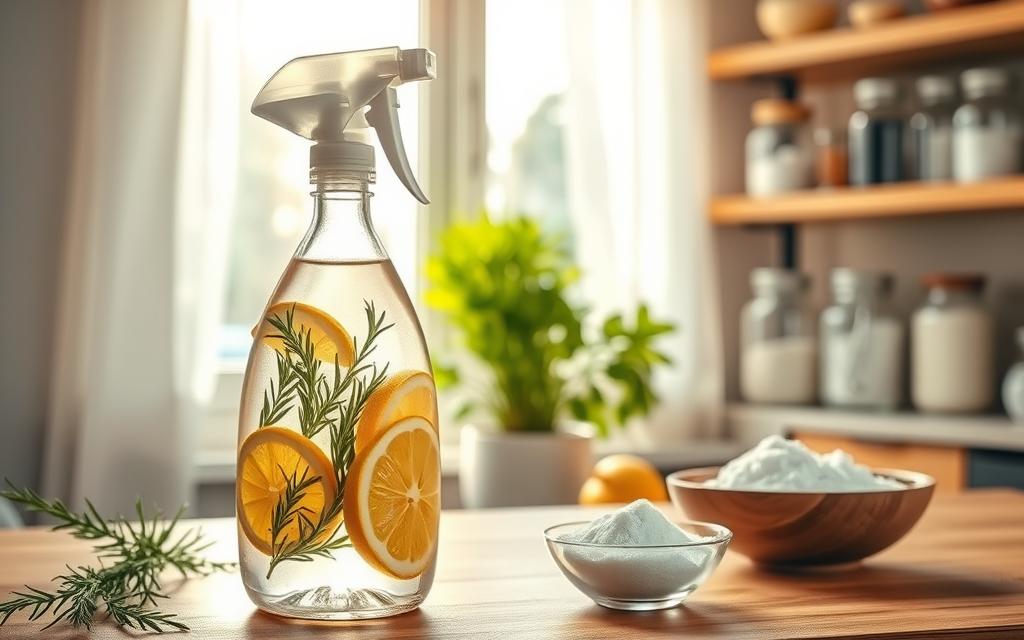
For everyday surfaces, mix 1 cup distilled water with 1 cup 5% white vinegar and 10–20 drops of tea tree or lemon essential oil.
Shake before use, spray, and wipe; avoid using this spray on natural stone. This all-purpose blend works well on counters, appliances, and nonporous surfaces.
Make a baking soda paste by mixing 3 parts baking soda with 1 part water. Use it to scrub grout, tubs, and sinks. Then rinse thoroughly.
For tougher cleaning, keep a 3% hydrogen peroxide spray in an opaque bottle. Use it undiluted on cutting boards, toilets, and high-touch items.
Let the spray sit for 1–10 minutes depending on your cleaning goal, then wipe the area down.
Try a citrus-citric acid cleaner to deodorize: combine 1 cup water with 1/4 cup lemon juice and 10 drops grapefruit seed extract or a citrus essential oil.
This fresh-scent cleaner brightens surfaces. Avoid using it on granite, marble, or limestone because it will damage stone.
Never mix vinegar and hydrogen peroxide in the same container, as this can cause harmful reactions.
Label every container with its ingredients and the date you mixed it. Store cleaning solutions in a cool, dark place to preserve freshness.
Use amber or opaque spray bottles for hydrogen peroxide. Keep vinegar-based cleaners in dark glass containers for longer shelf life.
Vinegar solutions stay stable for months. Hydrogen peroxide loses strength in light and should be replaced within 1–2 weeks after opening.
Essential oils keep their potency for months. Mark the batch date so you know when to refresh your supplies.
Follow basic safety rules: never mix bleach with vinegar or combine vinegar and hydrogen peroxide in one container.
Keep all cleaners out of reach of children and pets. Wear gloves if your skin is sensitive and ventilate rooms while cleaning.
Always test a small, hidden spot first on painted surfaces, plastics, and fabrics to avoid damage.
Natural stone requires pH-neutral cleaners. Avoid acidic mixtures like vinegar or lemon juice on granite, marble, or limestone.
Use a diluted castile soap solution for sealed stone surfaces instead of acidic cleaners.
For wood and sealed furniture, clean with mild soap and water or a lightly soapy castile mix.
Wring cloths until damp and avoid soaking wood. This prevents warping and damage to the finish.
Stainless steel and appliances clean well with a vinegar-based spray. Follow with a dry microfiber cloth to remove streaks.
Do not use abrasive pads, as they can scratch finishes on stainless steel and appliances.
For fabrics and upholstery, treat stains with gentle enzyme cleaners or soap solutions. Steam cleaning helps with deep sanitization.
Porous surfaces like wood and textiles are harder to disinfect. Focus on thorough cleaning and heat-based methods such as laundering when possible.
For more recipes and guidance, see this practical guide on how to disinfect naturally without harsh chemicals: safe cleaning solutions for home.
| Solution | Ingredients | Best Uses | Shelf Life |
|---|---|---|---|
| All-purpose spray | 1 cup water, 1 cup 5% vinegar, 10–20 drops essential oil | Counters, appliances, nonporous surfaces | 1–2 months |
| Baking soda paste | 3 parts baking soda, 1 part water | Grout, tubs, sinks | Use immediately |
| Hydrogen peroxide spray | 3% hydrogen peroxide (undiluted) | Cutting boards, toilets, high-touch items | Replace every 1–2 weeks |
| Citrus cleaner | 1 cup water, 1/4 cup lemon juice, 10 drops citrus oil | Deodorizing, mild cleaning (avoid stone) | Several weeks to months |
Using these approaches, you can craft a homemade disinfectant that balances effectiveness and safety. Small changes add up to a cleaner home. This method relies on natural disinfectants for home cleaning rather than harsh chemicals.
Keeping your home healthy means making smart choices and forming simple habits. Focus on high-touch spots and set a practical schedule. Use the right tools to make cleaning easier and more effective.
Small changes let you use green cleaning products and natural disinfectants. These options keep your home clean without extra effort.
Start by cleaning doorknobs, light switches, remote controls, and faucet handles. These spots get touched often and spread germs quickly.
Wipe refrigerator and appliance handles after each use to stop cross-contamination. Pay close attention to kitchen and bathroom hot spots.
Clean cutting boards, sink areas, toilet handles, and shower controls regularly. Also, clean drains and sink rims where grime builds up.
Shared items like toys, coat hooks, and pet bowls at entry points need regular attention.
Daily cleaning means wiping kitchen counters after meal prep. Clean dining surfaces and high-touch bathroom areas daily to reduce germs.
Weekly, do a deeper clean of bathrooms, refrigerators, and electronics. Use eco-friendly cleaners on surfaces that tolerate moisture.
Follow device makers’ advice for cleaning screens and keyboards to avoid damage. Increase cleaning after illness or exposure to germs.
Use stronger disinfectants like hydrogen peroxide or EPA-registered products when needed. Wash bedding and towels weekly in hot water. During illness, wash them more often and use a hot dryer.
Seasonal tip: increase cleaning during cold and flu season or before gatherings. Focus on shared spaces to lower the risk for everyone.
Choose microfiber cloths to trap dirt and reduce harsh chemical use. They work well with green cleaning products and safe solutions for home cleaning.
Use spray bottles with adjustable mist for even coverage. Scrub brushes clean grout and textured surfaces effectively.
Steam cleaners sanitize nonporous areas with heat, giving a chemical-free option. Consider UV-C sanitizers as a supplement when used safely.
Follow manufacturer instructions for UV devices. They should not replace manual cleaning methods.
Maintain your tools by regularly washing microfiber cloths and cleaning spray bottles. Follow guidelines for steam cleaners and UV devices.
Keep tools in good shape to get the best results from eco-friendly and safe cleaning products.
Create a checklist and share cleaning tasks with family members. Consistent habits make natural disinfectant use part of daily life.
Rely more on green cleaning products for a healthier home environment.
You likely have practical questions when switching to a natural disinfectant for home cleaning. Below are clear, short answers to common concerns. Use homemade disinfectant recipe and non-toxic disinfectant spray options with confidence.
Many natural antimicrobial agents like vinegar, hydrogen peroxide, and some essential oils work well against everyday household germs. These options reduce reliance on harsh chemicals and suit routine sanitation and prevention. However, they usually do not carry EPA-registered claims for killing specific pathogens like norovirus or some influenza strains.
If someone in your home is sick or you face high-risk exposure, the CDC and EPA recommend an approved disinfectant with validated contact times.
Shelf life varies by product. Vinegar-based cleaners stay stable for months when stored in a cool, dark place. Hydrogen peroxide loses potency faster if exposed to light and air, so keep diluted solutions in opaque containers. Replace these every one to two weeks.
Essential oils degrade slowly and can remain usable for months to a year. Always date your homemade mixes, clean spray bottles to avoid contamination, and rotate supplies to keep effectiveness.
Some combinations are safe and useful, but others can be risky or ineffective. Do not mix vinegar and hydrogen peroxide in the same container because this creates unstable chemistry. Never combine bleach with vinegar or hydrogen peroxide: hazardous gases can form.
Baking soda and vinegar fizz but produce only a short-lived reaction, so they are not reliable disinfectants together. A practical approach is to keep single-purpose solutions: use a vinegar plus essential oil spray for general cleaning. Keep a separate hydrogen peroxide bottle for tougher disinfection tasks.
Always label bottles and follow manufacturer guidance for commercial natural products. Use natural disinfectants at home to lower chemical exposure and support a greener household. Test solutions on surfaces, respect recommended contact times, and choose stronger EPA-registered disinfectants when dealing with confirmed illness or outbreaks.