Our Location
304 North Cardinal St.
Dorchester Center, MA 02124

304 North Cardinal St.
Dorchester Center, MA 02124

Discover effective sofa cleaning tips to keep your upholstery fresh and spotless. Learn expert methods for removing stains, odors, and dirt using household products.
Anúncios
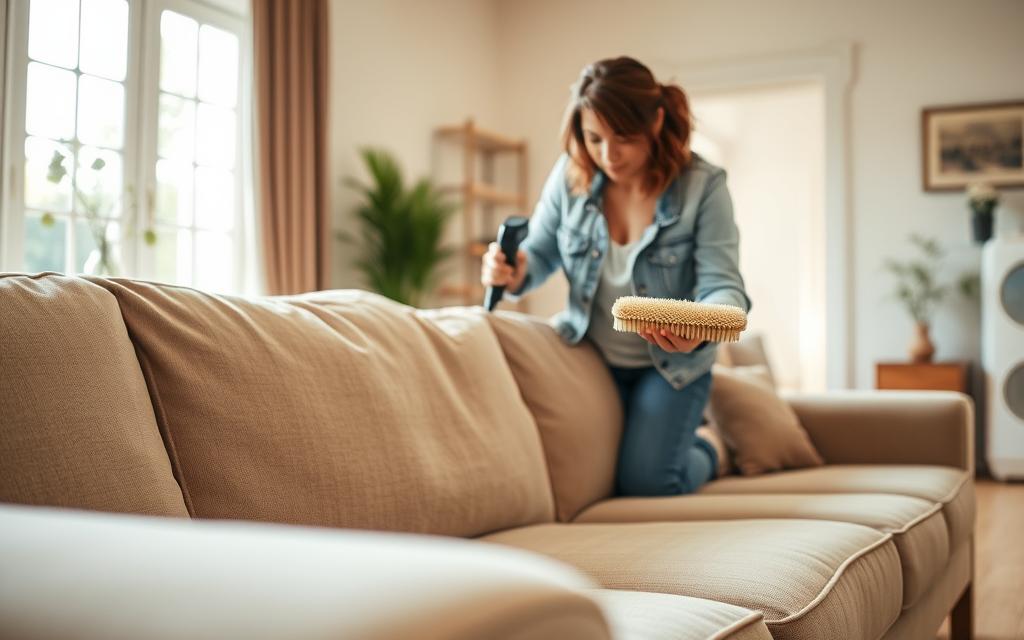
The average household sofa has 12 times more bacteria than a toilet seat. This fact shows why learning sofa cleaning tips is vital for a healthy home.
Your sofa is a cozy spot for relaxation and family time. DIY couch cleaning keeps your space fresh and extends your furniture’s life.
This guide will teach you how to clean your sofa using simple tools and household items. You’ll learn to tackle stains, pet hair, and routine upkeep.
We’ll cover cleaning methods for different fabrics and regular care routines. These tips will help keep your sofa looking great for years to come.
Anúncios
Knowing your sofa’s fabric type is vital for proper maintenance. Different materials need specific cleaning methods. This knowledge helps you choose the right cleaning solutions.
Understanding fabric characteristics preserves your sofa’s look and longevity. It’s key to effective upholstery care.
Sofas come in various fabric types. Each has unique cleaning needs. Here are the most common upholstery materials:
Every sofa has a fabric care code. These codes guide you on safe cleaning methods. They’re essential for proper upholstery care.
Anúncios
| Care Code | Meaning | Recommended Cleaning Method |
|---|---|---|
| W | Water-based cleaning | Use water-based upholstery cleaning solutions |
| S | Solvent-based cleaning | Use dry-cleaning solvents only |
| WS | Water or solvent-based cleaning | Flexible cleaning options |
| X | Vacuum only | Professional cleaning recommended |
Knowing your sofa’s fabric type and care code is crucial. It ensures proper maintenance and extends your furniture’s life. This knowledge helps you care for your beloved sofa effectively.
Gathering the right tools is key for successful sofa cleaning. With proper equipment, you can simplify your furniture cleaning hacks. Your cleaning arsenal will help tackle dirt, stains, and maintain your sofa’s condition.
Let’s explore the essential tools for effective and efficient sofa cleaning. These tools will make your cleaning tips more practical and useful.
| Equipment | Purpose | Recommended Type |
|---|---|---|
| Vacuum Cleaner | Remove loose dirt and debris | Upholstery attachment model |
| Soft-Bristled Brush | Gentle fabric agitation | Horsehair or microfiber brush |
| Spray Bottle | Apply cleaning solutions | Fine mist adjustable nozzle |
| White Cloths | Blotting and cleaning | 100% cotton or microfiber |
Quality sofa cleaning tools help maintain your furniture’s appearance. They also extend its lifespan, keeping your sofa looking great for years.
Remember to always test cleaning solutions on a small, hidden area first. This ensures fabric compatibility and prevents damage to your sofa.
Deep cleaning upholstery needs careful planning. Take essential steps to protect your furniture and get the best results. This guide will help you prepare for cleaning your sectional sofa.
Vacuuming is the first crucial step in deep cleaning upholstery. It removes loose dirt, dust, and debris that could create more stains during cleaning. Follow these key tips for effective vacuuming.
Always perform a spot test before applying any cleaning product. This step prevents potential fabric damage or discoloration. Follow these steps for spot testing.
Pro tip: Different upholstery fabrics require different cleaning approaches. Always check your sofa’s care label for specific instructions before cleaning.
Cleaning your sofa can be easy and cheap. You can use natural ingredients from your home. These DIY solutions will keep your couch fresh and clean.
Homemade cleaners work well and save money. They’re simple to make and use.
Making your own cleaners is simple. Here are some effective homemade solutions:
Vinegar and baking soda are great for cleaning couches. They offer many benefits:
Always test cleaners on a hidden spot first. Different fabrics may react differently to homemade solutions.
These DIY methods can keep your sofa looking great. They’re safe, effective, and budget-friendly.
Sofa stains can be daunting, but proper techniques can help maintain your fabric sofa’s appearance. Quick action and the right cleaning methods are key to effective stain removal.
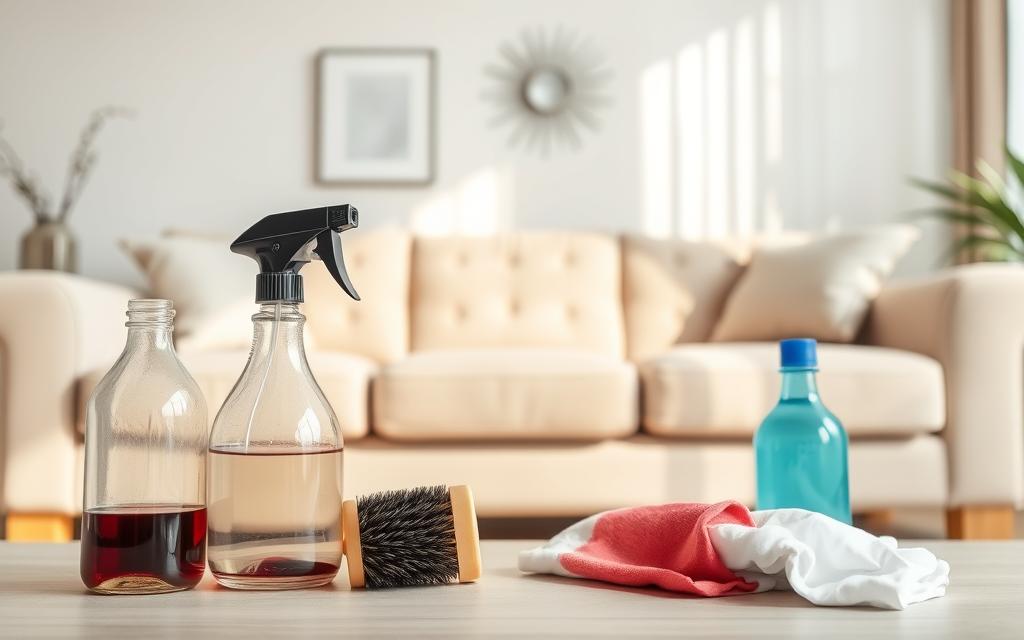
Food and drink accidents don’t have to ruin your sofa. Here are steps for quick stain removal:
Pet accidents need special cleaning to remove marks and smells. Enzyme-based cleaners are best for breaking down stains and neutralizing odors.
| Stain Type | Recommended Cleaner | Treatment Method |
|---|---|---|
| Fresh Pet Stains | Enzymatic Cleaner | Blot, Apply Cleaner, Air Dry |
| Set-In Pet Stains | White Vinegar Solution | Saturate, Let Sit, Blot Dry |
Ink stains can be tricky, but don’t worry. Rubbing alcohol often works well on fabric sofas. Apply it carefully with a clean cloth to lift the stain.
Different fabrics need different cleaning methods. Always check your sofa’s care label before treating stains. Test any cleaning solution on a hidden spot first.
Choosing the right upholstery cleaner can greatly improve your sofa’s look and lifespan. Professional-grade products offer targeted treatments for various fabrics. These cleaners ensure thorough cleaning without damaging your furniture.
When picking a leather sofa cleaner, consider these key factors. They’ll help you select the best option for your furniture.
Your choice of upholstery cleaner should depend on several important factors:
Pro Tip: Always test any leather sofa cleaner on a small, hidden area first to verify compatibility.
Professional cleaning products offer powerful solutions to restore your sofa’s beauty. Understanding your needs helps you pick the right cleaner.
With proper selection, you can keep your upholstery fresh and clean for years.
Deep cleaning your sofa requires special techniques. These methods restore beauty and extend the life of your furniture. A tired sofa can become a fresh, inviting centerpiece with the right approach.
Professional deep cleaning improves your sofa’s look and hygiene. Knowing effective techniques helps maintain your furniture’s quality and appearance.
Steam cleaning works great for microfiber sofa cleaning. It removes deep-set dirt and allergens from fabric fibers. Check your sofa’s care label before steam cleaning.
Spot cleaning is best for localized stains. Different fabrics need unique approaches. Microfiber sofa cleaning requires gentle techniques to avoid damage.
Each sofa fabric has unique cleaning needs. Always follow manufacturer recommendations to protect your investment.
Effective sofa care goes beyond occasional cleaning. Regular upkeep can extend your furniture’s life and keep it inviting. Proper maintenance preserves your sofa’s fresh appearance.
Smart care routines prevent damage before it occurs. Simple, quick practices can protect your investment. Regular upkeep doesn’t need to be complex or time-consuming.
Sectional sofa care involves proactive strategies to minimize potential damage. Consider these protective measures:
Your sofa is a key part of your home. Simple cleaning tips can maintain its look and function. Consistent care ensures your sofa remains beautiful for years.
Prevention is always easier than restoration!
DIY furniture cleaning hacks can work wonders. However, some situations require professional expertise. Your sofa might need specialized attention beyond typical home cleaning methods.
Professional help can save your furniture from damage and extend its lifespan. Deep clean upholstery services are crucial in specific scenarios.
Professional cleaning teams bring specialized equipment and expertise. They use advanced techniques for various fabric types. This ensures thorough sanitization without compromising your furniture’s integrity.
Professional cleaning includes a comprehensive assessment. This assessment covers fabric inspection and a customized cleaning approach.
Professional furniture cleaning improves your sofa’s appearance, hygiene, and longevity. It provides expert care that maintains your furniture’s beauty and functionality.
Keeping your sofa clean is easy with the right approach. Regular maintenance can transform your living space and extend your furniture’s life. Simple steps can keep your upholstery fresh and inviting.
Weekly vacuuming and quick stain treatment are key strategies. Periodic deep cleaning also helps maintain your sofa’s appearance. Always check manufacturer guidelines before cleaning different fabric types.
Proper sofa care protects your investment and creates a comfy living space. You’ll enjoy a clean, fresh-smelling sofa that looks great for years.
Know your sofa’s fabric type and use the right cleaning tools. Develop a consistent maintenance routine and tackle stains quickly. Use gentle cleaning solutions and seek professional help when needed.
A well-kept sofa looks great and creates a welcoming home atmosphere. Regular cleaning improves indoor air quality and prevents permanent staining. Your sofa becomes a comfortable space for you and your guests to relax.