Our Location
304 North Cardinal St.
Dorchester Center, MA 02124

304 North Cardinal St.
Dorchester Center, MA 02124

Discover effective tips on how to remove bad smell from fridge naturally. Freshen your fridge with simple, eco-friendly solutions today!

Anúncios
Surprising fact: just one forgotten container can make your refrigerator smell bad in less than 48 hours. The odor spreads to other foods fast.
You want to remove fridge odors fast without harsh chemicals. Natural methods are safer for surfaces that touch food. They are also kinder to indoor air and better for the planet.
These natural solutions usually cost less and use items you likely already have at home.
Anúncios
This article gives a clear plan. First, understand what causes fridge odors. Next, use natural deodorizers like baking soda, white vinegar, and activated charcoal.
Then, follow a step-by-step cleaning routine. Finish with treatments and upkeep tips that keep smells away long term.
You can expect fresh smells after one cleaning. For passive deodorizing, bowls of baking soda or charcoal need 24–72 hours to work fully.
Before you begin, gather basics: baking soda, white vinegar, microfiber cloths, activated charcoal or fresh coffee grounds, and citrus peels. Having these ready helps you get your fridge clean quickly.
Anúncios
Before you start cleaning, it helps to know why smells appear. Identifying the causes of fridge odor lets you pick the right approach. A quick inspection can show if the issue is a spill or a longer-lasting problem.
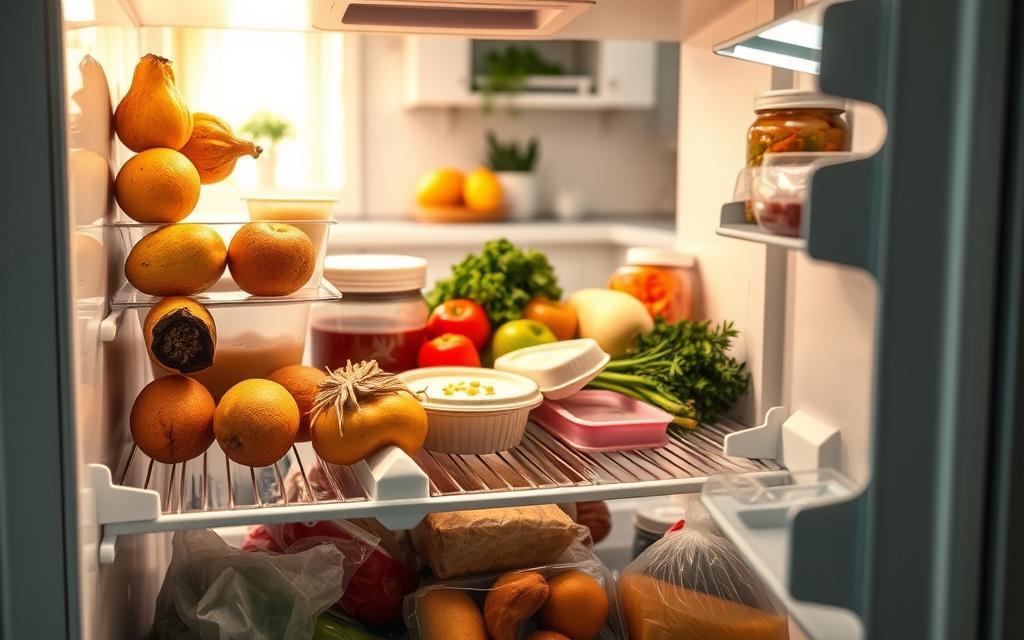
Spilled milk, sauces, and leaky containers often pool in drawers, door shelves, or under drip pans. These residues break down and release unpleasant scents.
Forgotten items like expired deli meat or wilted produce hide behind jars. They become strong odor sources. Strong-smelling foods such as garlic, seafood, or blue cheese also transfer scents if not sealed well.
Mold and mildew grow in moist spots like door gaskets, drain channels, and vents. They cause musty, persistent odors. Cross-contamination from raw meat stored above ready-to-eat items spreads odor and bacteria.
When proteins and fats decompose, bacteria produce smelly compounds such as sulfides and amines. These compounds create the foul smells you notice. Warm spots inside the fridge from blocked vents or uneven cooling make this process faster.
It helps to know the difference between sudden smells from one spoiled item and ongoing odors from mold or trapped residue. Weekly checks of your fridge’s smell and appearance help catch problems early.
Also, watching expiration dates helps you use natural ways to stop fridge smells before they spread.
You can freshen your refrigerator with three food-safe, eco-friendly options. These work well alone or together. They remove odors without harsh chemicals and fit a clean-kitchen routine.
Baking soda neutralizes acidic and basic odor molecules through gentle absorption and mild chemical action. For daily use, place an open box or a shallow bowl on a shelf. You can also sprinkle some into sink drains or mix it into a paste for scrubbing stubborn spills.
Replace the baking soda fridge packet or open container every 1–3 months to keep it effective. Do not reuse spent baking soda for baking. Brands like Arm & Hammer and store brands offer food-grade options at low cost.
White distilled vinegar contains about 5% acetic acid. It dissolves mineral deposits, cuts grease, and lowers surface bacteria that cause odors. Dilute vinegar with water to make a practical cleaner for shelves, drawers, door gaskets, and removable parts.
Wipe surfaces and allow them to air-dry so odor-causing microbes stay reduced. Use vinegar in a well-ventilated space. Never mix it with bleach or hydrogen peroxide for safety.
Activated charcoal traps volatile organic compounds and odor molecules on its large porous surface. Place a breathable pouch or small container on a shelf for long-term control of lingering smells. This deodorizer often outperforms baking soda on low-level, persistent odors.
Look for bamboo charcoal bags, loose pellets, or reusable commercial options from brands such as Moso Natural. These provide reliable sources and easy maintenance.
| Agent | Best Use | Replacement | Strength |
|---|---|---|---|
| Baking soda | Everyday odor control, paste for scrubs | 1–3 months | Cheap, versatile |
| White vinegar | Cleaning shelves, gaskets, sanitizing | As needed | Great cleaner, short-term odor neutralizer |
| Activated charcoal | Long-term absorption, stubborn odors | 3–6 months (depends on product) | Powerful for persistent smells |
You get the best results by combining methods. First, clean with a vinegar fridge cleaner. Then place a baking soda box or activated charcoal deodorizer for ongoing control. These eco-friendly solutions keep your appliance fresh without toxic sprays.
Keeping your refrigerator fresh starts with a clear plan. Use this step-by-step fridge cleaning guide to work efficiently and protect food. Gather baking soda, white distilled vinegar, microfiber cloths, a soft brush for gaskets, a bucket, a spray bottle, trash bags, and a cooler if needed.
Start by removing all food, condiments, and removable parts like shelves and drawers. Place perishables in a cooler if cleaning will take over 30 minutes. Unplug the unit if you plan to lift heavy shelves for soaking.
Inspect items as you remove them. Toss expired products, moldy containers, and anything leaking. Transfer open foods into airtight containers to reduce odors. Group items by category—dairy, condiments, leftovers—to return them in order.
Mix two simple solutions. Solution A is warm water with 2 tablespoons baking soda per quart for gentle scrubbing. Solution B is equal parts water and white vinegar in a spray bottle to disinfect and cut grease.
Use Solution A for soaked shelves and drawers, then rinse and dry completely. Spray the vinegar mix on interior walls, ceiling, door gaskets, and the drip pan. Scrub gasket folds and drain channels with a soft toothbrush to remove grime. Dry every part thoroughly before reassembly to avoid moisture and mold.
Return cleaned, sealed foods to the fridge in organized zones. Place an open box of baking soda or a charcoal pouch inside for ongoing odor control. For detailed notes, consult this guide on deep-cleaning kitchen appliances for step-by-step tips.
Use these fresh fridge tips as part of a regular routine: quick daily wipe-downs, weekly spot checks, and a monthly deep clean. These DIY fridge smell remedies help keep the unit smelling clean. They also make removing bad fridge smells easier when odors return.
Baking soda is a safe, low-cost tool to fight fridge smells. It neutralizes acids and bases that cause odors. Read on for a simple paste recipe and practical cleaning tips.
Mix three parts baking soda with one part water to make a spreadable paste for cleaning. Adjust water to get a thick but workable texture. This paste works well on stained shelves, drawer bottoms, and crevice areas in door gaskets.
Apply the paste to smelly or stained spots. Let it sit for 10–15 minutes to loosen grime and neutralize odors. Use a soft sponge or cloth to scrub gently.
Wipe away residue with a damp cloth. Rinse with clean water or mild vinegar to remove leftover film. Rinse thoroughly if you cleaned food-contact surfaces.
Baking soda is non-toxic and food-safe, but leftover residue can leave a faint taste on containers if not removed completely.
Keep an open box or shallow bowl with about 1 cup of baking soda on a middle shelf for deodorizing. Label the container with the date. Replace it every one to three months to maintain freshness.
For targeted use, sprinkle baking soda in drawer bottoms or the drip pan. Place a shallow container near the fridge’s back to catch odors where they often collect. These homemade absorbers work quietly and without chemicals.
Use baking soda after cleaning with vinegar to absorb leftover smells. Avoid mixing baking soda paste and vinegar in a closed jar. They neutralize each other, and fizz loosens grime only briefly in open air.
Be gentle on rubber seals. Heavy scrubbing can wear gaskets. Clean those areas with light pressure and dry them fully.
You can rely on plain white vinegar to tackle stubborn fridge smells in a simple, eco-friendly way. Vinegar cuts grease, reduces bacteria, and neutralizes odors without harsh chemicals. Use it as a vinegar fridge cleaner when you want an effective, low-cost option.
Mixing the right vinegar solution for fridge care is easy. For general cleaning, combine equal parts white distilled vinegar (5% acetic acid) and warm water in a spray bottle.
For greasy or persistent spots, use a stronger ratio of 1 part vinegar to 2 parts water. You may also apply undiluted vinegar sparingly and rinse afterward.
Adding a few drops of lemon essential oil can soften the sharp scent. Avoid strong fragrances that may linger near food. This method fits well among eco-friendly fridge odor solutions when you want to avoid synthetic cleaners.
Measure the vinegar and warm water into a clean spray bottle. Shake gently to mix. Label the bottle so you know it’s a vinegar solution for fridge use.
Test the mix on a small, hidden shelf if you worry about finishes. Never mix vinegar with bleach or ammonia, as this creates dangerous fumes.
Remove food and loose debris from shelves and drawers before you spray. Lightly mist interior surfaces and let the solution sit for three to five minutes to break down residues and lower bacteria levels.
Wipe with a microfiber cloth and dry surfaces to discourage mold. Use an old toothbrush dipped in the vinegar mix to clean rubber gaskets and crevices. Then rinse and dry thoroughly.
For drip pans and drain channels, flush with the vinegar solution, followed by warm water to clear buildup. If odors persist after cleaning, pair the vinegar treatment with baking soda or activated charcoal to help eliminate fridge odors naturally.
| Task | Vinegar Mix | Time to Sit | Notes |
|---|---|---|---|
| General cleaning | 1:1 vinegar to warm water | 3–5 minutes | Safe on most surfaces; test if unsure |
| Greasy spots | 1 part vinegar to 2 parts water or undiluted for spot use | 3–5 minutes | Rinse undiluted vinegar after use to protect finishes |
| Gasket and crevices | 1:1 in a small container for toothbrush use | Work while scrubbing | Dry completely to prevent mold growth |
| Drain channels & drip pans | 1:1 flush, follow with warm water | Immediate flush | Helps clear clogs that harbor bacteria |
When your fridge still holds a faint odor after cleaning, use simple kitchen options. These absorb smells without harsh chemicals. They are cheap and easy to replace as needed.
Below are practical choices you can try right away.
Fresh coffee grounds work because they are porous. They trap odor molecules inside. Place a shallow bowl of dry grounds on a shelf for 24–72 hours to absorb smells.
This leaves a neutral or mild coffee scent. Use only dry grounds to avoid mold. Change them every few days for continuous odor control.
Avoid setting grounds on porous surfaces to prevent stains. This method is best for quick, short-term fridge odor removal.
Citrus peels contain natural oils like limonene that mask odors and fight microbes lightly. Place fresh orange, lemon, or grapefruit peels in a small bowl or on a paper towel for a day or two after cleaning.
This adds a bright scent to your fridge. To make peels last longer, dry them in the oven or air-dry to create sachets. Combine dried peels with baking soda in a breathable pouch for extra odor control.
Replace peels regularly to stop decay and mold. You can also use vanilla-soaked cotton balls for a soft aroma, silica gel packs for moisture control, and reed-style charcoal absorbers for longer odor control.
Rotate or refresh these natural deodorizers often. This keeps your fridge smelling fresh without synthetic sprays.
Keeping your refrigerator smelling clean takes simple habits and a little planning. Use regular checks and small daily tasks to prevent odors before they start.
These fresh fridge tips help you avoid deep-clean emergencies. They also keep food safe.
Do a quick weekly scan for spills, leaking containers, or items past their prime. Wipe minor spills immediately with a damp cloth and mild vinegar solution. This stops smells from setting in.
Every 4–6 weeks, empty shelves and drawers for a deep clean. Use baking soda and vinegar for effective odor removal.
Remove drawers, wash them, and let parts dry completely before returning them.
Replace absorbers on a schedule. Swap baking soda boxes or activated charcoal pouches every 1–3 months.
Refresh coffee grounds or citrus peels as needed for ongoing eco-friendly fridge odor solutions.
Keep the temperature steady between 35–38°F (1.7–3.3°C). Set the freezer at 0°F (-18°C). Consistent temps reduce bacterial growth and food spoilage.
Store leftovers, cheeses, and strong-smelling foods in airtight containers to prevent odor transfer. Choose glass or BPA-free plastic with tight seals for best results.
Label leftovers with dates and follow FIFO (first in, first out). Rotate items so older foods are used first.
Keep pungent foods like fish, blue cheese, and onions in sealed containers on lower shelves to limit odor migration.
Do not overpack shelves. Good air circulation maintains even temperature and cuts spoilage.
Manage moisture in crisper drawers by using the right humidity settings and washable liners. Drain excess liquid from produce containers to stop bacterial growth.
Adopt quick daily habits: wipe spills immediately, check milk and dairy often, and keep baking soda or charcoal on a shelf for odor control.
These steps support fresh fridge care. They also fit with practical, eco-friendly fridge odor solutions.
If your fridge still smells bad after using baking soda, vinegar, and charcoal, it may be time to call a technician.
Persistent odors, recurring mold in gaskets or vents, unusual mechanical smells like burning or refrigerant, and pooled water or clogged drains are signs that simple cleaning won’t fix the root cause.
Note these issues and their timelines before contacting a pro to speed up the fridge odor diagnostics process.
Check if the odors seem embedded in the walls or insulation, not just on surfaces.
If mold or mildew returns quickly after cleaning, or you smell chemical or electrical scents, these are clear signs of a serious fridge odor problem.
Excess condensation and a drain you can’t clear also suggest mechanical repair is needed.
Appliance technicians can diagnose and repair faulty seals, blocked drains, thermostat problems, or refrigerant leaks that cause persistent smells.
Professionals use tools to sanitize hidden cavities, clean gaskets, and flush drain channels properly.
If odors are trapped in insulation or internal parts, technicians can advise if repairs or full replacement is better.
For heavy mold, specialists follow EPA-recommended methods to remove contamination safely.
If you seek help, look up local appliance repair firms, read reviews, and get estimates.
Make a short list of cleaning steps tried and check any warranty or service plan you have.
Knowing when to call for repair and documenting your efforts helps make the diagnostic visit faster and more effective.